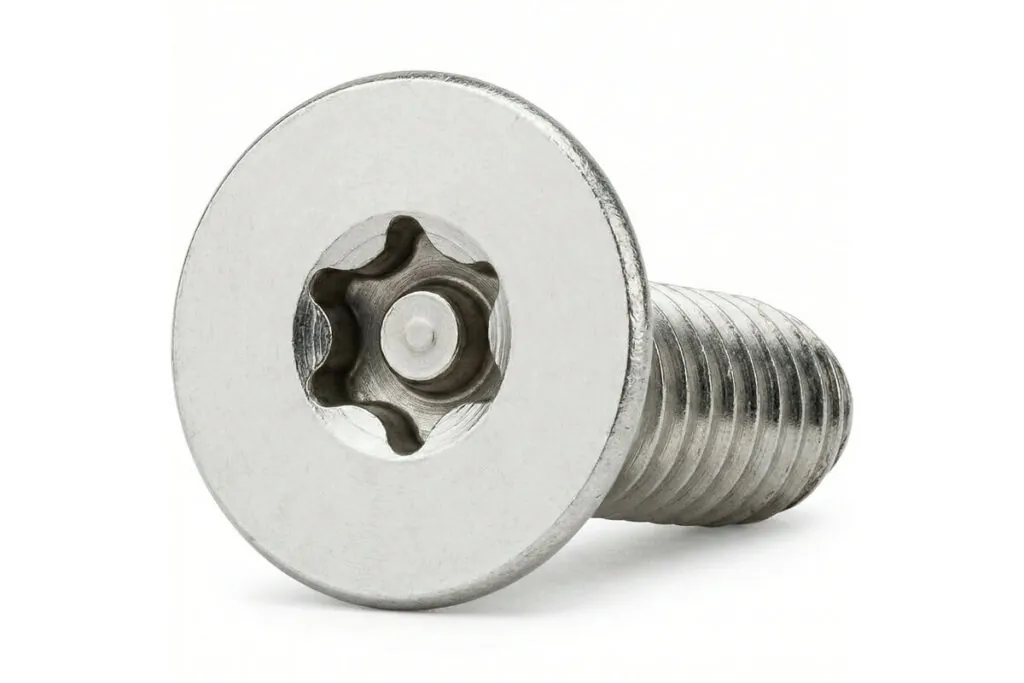
Torque-Resistant Drive Screws

This image shows a torx screw which is a type of Torque-Resistant Drive Screws

Definition of Torque-Resistant Drive Screws

Torque-resistant drive screws are construction fasteners engineered with reinforced drive recesses that withstand elevated installation torque without cam-out or recess deformation. The geometry of the drive interface, whether Torx, square, or hexalobular, distributes rotational force across multiple contact points rather than concentrating stress at a single apex.

This design is critical in structural framing, composite decking, and metal roofing applications where power tools operate at high RPM and torque output. Recess integrity directly determines whether a fastener can be driven flush, countersunk, or removed without damage, affecting both installation speed and long-term serviceability.

Why It Matters for Screws and Fasteners

Drive Recess Geometry and Installation Reliability
The performance of torque-resistant drive screws as construction fasteners depends heavily on the precision of the drive recess. A well-formed Torx or square recess maintains dimensional tolerance under repeated torque cycles without rounding. Poorly formed recesses increase driver bit wear, slow installation rates, and risk stripping during removal, adding significant labor cost on large-scale projects.

Material Hardness and Drive Integrity
Case-hardened or through-hardened steel ensures the drive recess maintains its shape even when subjected to impact driver torque. For construction fasteners used in treated lumber or dense composite substrates, the combination of sharp thread geometry and a robust drive is essential. Softer alloys or inconsistent heat treatment can compromise recess integrity even before the fastener reaches full seating depth.

Quality Control and Specification Compliance
Consistent torque-resistant drive recess depth and width must fall within tight manufacturing tolerances. Out-of-specification recesses fail inspection under standard drive engagement tests and lead to field complaints. Reputable manufacturers document recess geometry against ISO 10664 or ASME B18.3 criteria.

FAQ

How does drive recess geometry in torque-resistant drive screws affect performance when using impact drivers in construction fasteners applications?

The drive recess geometry in torque-resistant drive screws determines how efficiently rotational force transfers from the bit to the fastener. Hexalobular and square recesses distribute torque across multiple lobes or walls, reducing point stress that causes cam-out. When impact drivers are used in construction fasteners applications, the recess must maintain dimensional accuracy under repeated hammer blows. When sourcing from Taiwan screw manufacturers like Cheng Hao, verifying recess depth tolerance and hardness specifications ensures the drive system performs consistently across high-volume installations without premature bit wear or recess deformation.

What material grades and heat treatment specifications should torque-resistant drive screws meet for structural construction fasteners applications?

For structural construction fasteners applications, torque-resistant drive screws typically require case hardening to a minimum surface hardness of 45 HRC with a core hardness that maintains toughness and prevents brittle fracture under lateral load. Carbon steel grades such as SAE 1022 or 10B21 with boron additions are common for screws requiring high torsional strength. Stainless steel grades 410 or 316 may be specified in corrosive environments. Cheng Hao applies precise heat treatment cycles to ensure drive recess integrity is maintained throughout the full hardness range specified for each product.

How can the cam-out resistance of torque-resistant drive screws be evaluated before committing to a large construction fasteners order?

Cam-out resistance in torque-resistant drive screws can be evaluated through standardized torque testing per ISO 10664 or ASME B18.6.3, which specifies minimum torque values before the driver exits the recess. Request certified test reports from the manufacturer showing bit engagement depth, applied torque at cam-out initiation, and recess hardness measurements. Physical installation trials using production-intent drivers and substrate materials provide the most reliable real-world performance data. Consistent results across multiple sample lots indicate robust manufacturing process control that will translate to reliable field performance in construction fasteners applications.

inquire now