
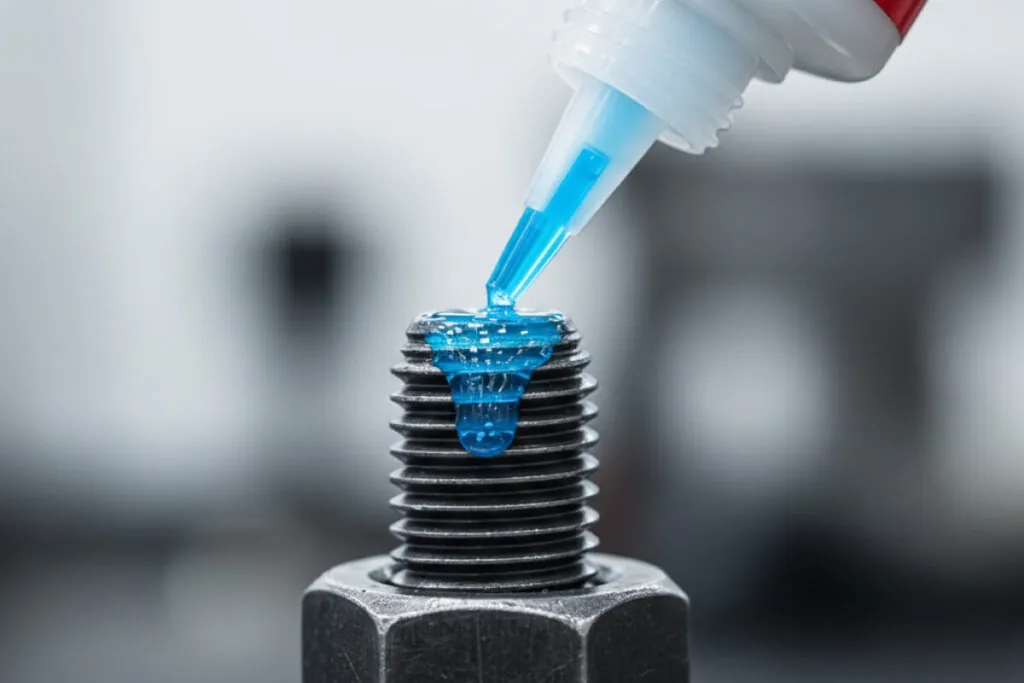
Selection between low-strength and high-strength industrial fasteners thread locking compounds for HVAC applications depends on anticipated service conditions and maintenance requirements. Low-strength formulations suit components requiring seasonal adjustment or regular servicing, such as damper actuator mounting screws or access panel fasteners, where breakaway torques must permit standard tool disassembly without fastener damage. Medium-to-high strength compounds are appropriate for structural connections in air handling units or compressor mounting bolts where vibration resistance is critical and disassembly is infrequent. When sourcing from manufacturers like Cheng Hao, specifying medium-strength threadlockers for critical fasteners in equipment subjected to continuous operation and vibration exposure provides optimal balance between retention performance and field serviceability. Engineers should also consider temperature exposure, as HVAC systems may experience thermal cycling from ambient to 80°C, requiring compounds with adequate temperature stability to maintain retention strength across the operating envelope without degrading or becoming brittle.
Surface preparation for industrial fasteners thread locking compounds on zinc-plated fasteners requires removal of oils, anti-seize compounds, and loose plating particles that inhibit adhesive cure and bond formation. Solvent cleaning with isopropanol or acetone eliminates hydrocarbon contamination, while light abrasion using nylon brushes removes loose zinc particles without damaging the underlying plating. Cheng Hao recommends avoiding aggressive mechanical preparation that exposes base steel, as this may accelerate galvanic corrosion beneath the thread locking compound. For zinc surfaces exhibiting poor cure performance due to plating thickness or composition, activator primers containing transition metal ions can be applied to accelerate anaerobic polymerization. Thread locking compound manufacturers typically specify that clean, dry threads provide optimal conditions for cure, with residual oils reducing bond strength by 40 to 60 percent. Quality assurance procedures should verify proper cleaning through water break tests or surface energy measurements before applying thread locking compounds to critical fasteners in production environments where field failures from inadequate adhesion carry substantial warranty costs.
Cure rate variations for industrial fasteners thread locking compounds between stainless steel and carbon steel result from differences in surface chemistry and metal ion availability. Anaerobic adhesives rely on metal ions (particularly iron, copper, and manganese) present on substrate surfaces to initiate the free radical polymerization reaction that cures the compound. Carbon steel surfaces provide abundant ferrous ions that rapidly trigger polymerization, achieving handling strength in 10 to 20 minutes under typical conditions. Stainless steel's passive chromium oxide layer inhibits metal ion migration to the adhesive interface, extending cure times to 30 to 60 minutes for handling strength and potentially 48 hours for full cure. Austenitic stainless steels (300 series) demonstrate slower cure than ferritic grades due to lower magnetic permeability and reduced ferrous content. Applications involving stainless steel fasteners benefit from activator primers that introduce reactive metal species to the surface, reducing cure time to levels comparable with carbon steel and ensuring adequate retention strength development in time-sensitive assembly processes where throughput demands conflict with extended cure requirements.

| Service | Cookies | Description |
|---|---|---|
| Google Analytics | _gat_gtag, _ga, _gid | Used to distinguish users and sessions for web statistics purposes. |
| Service | Cookies | Description | |
|---|---|---|---|
| Google Analytics | _gat_gtag, _ga, _gid | Used to distinguish users and sessions for web statistics purposes. |