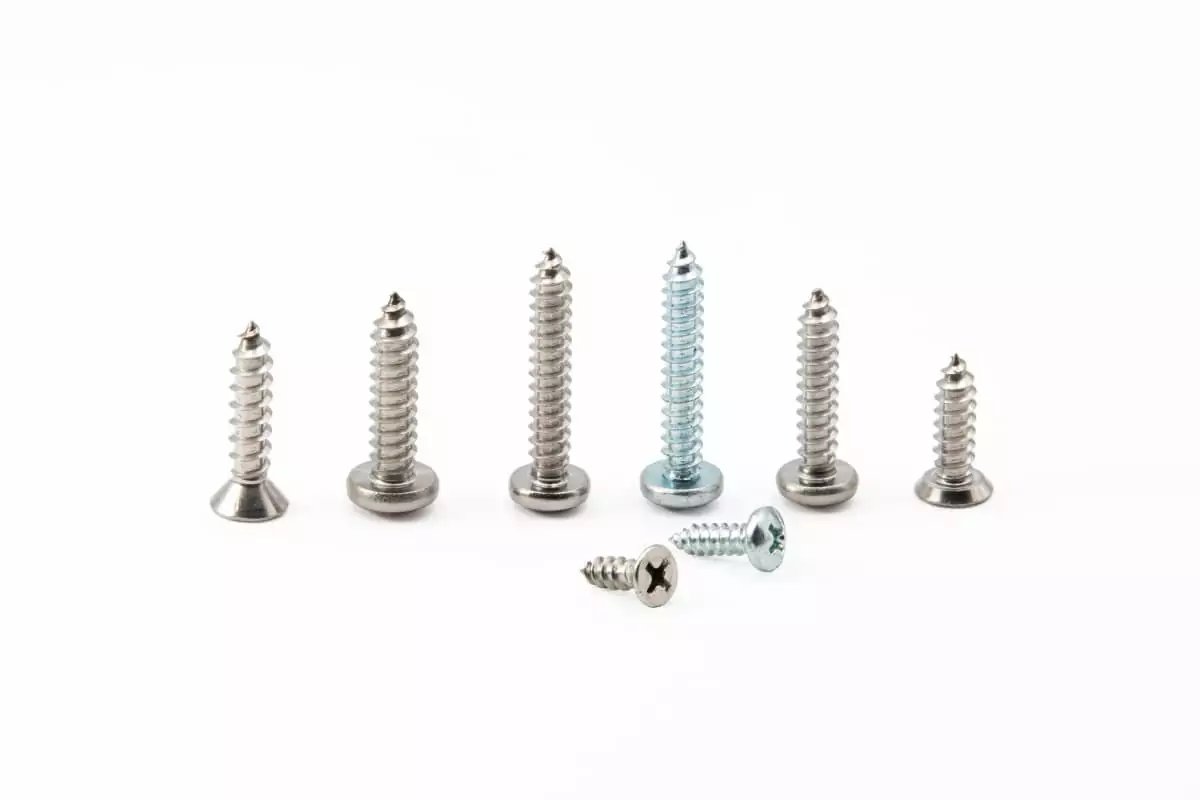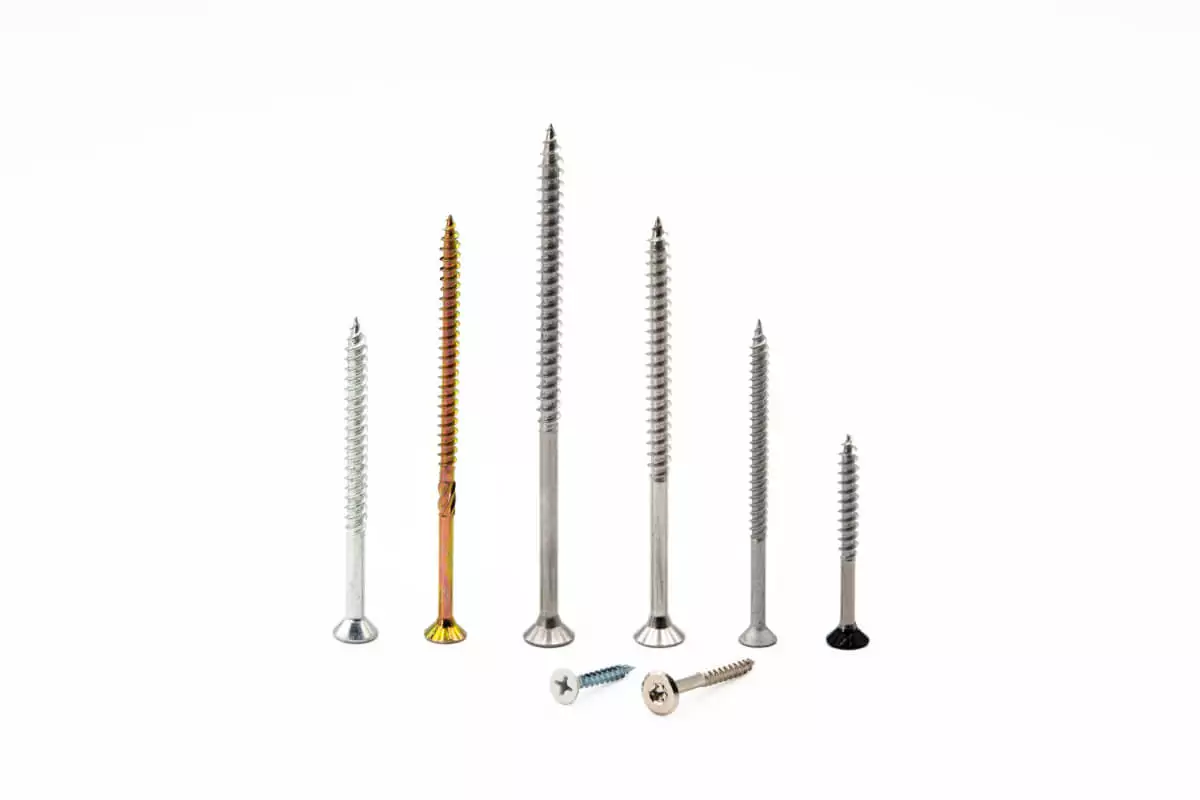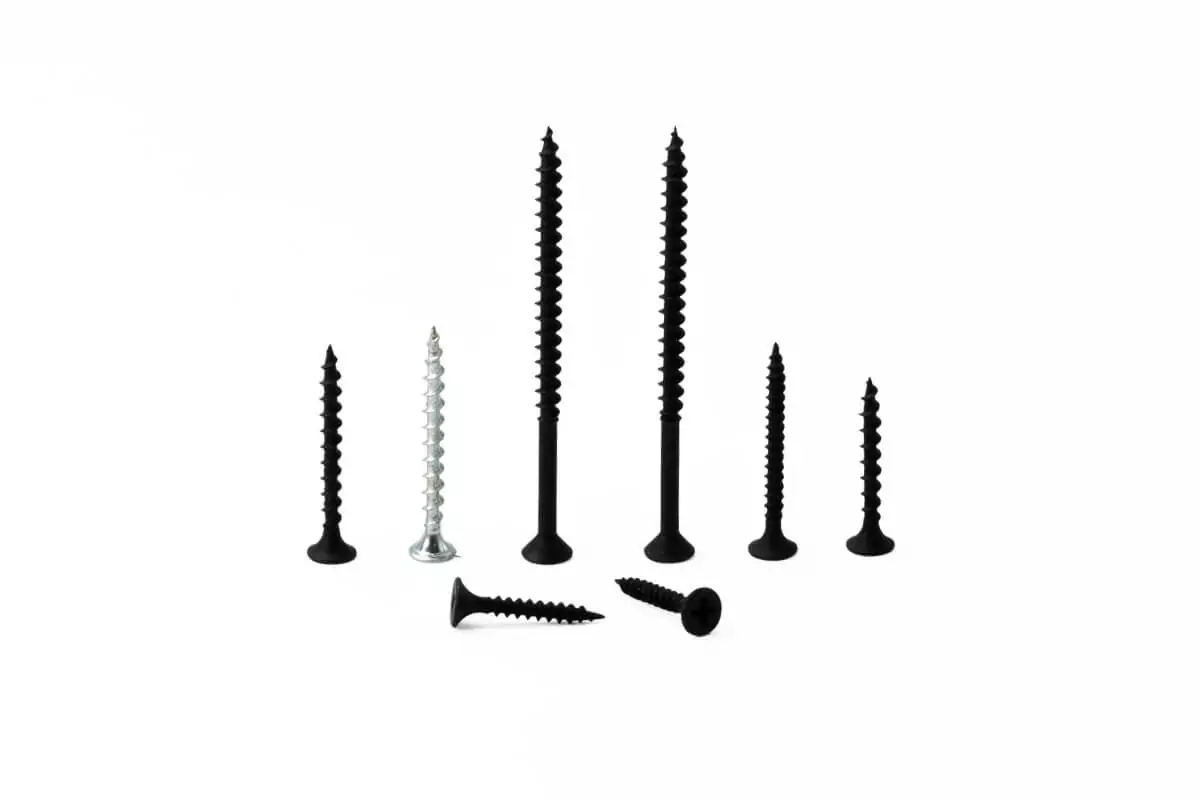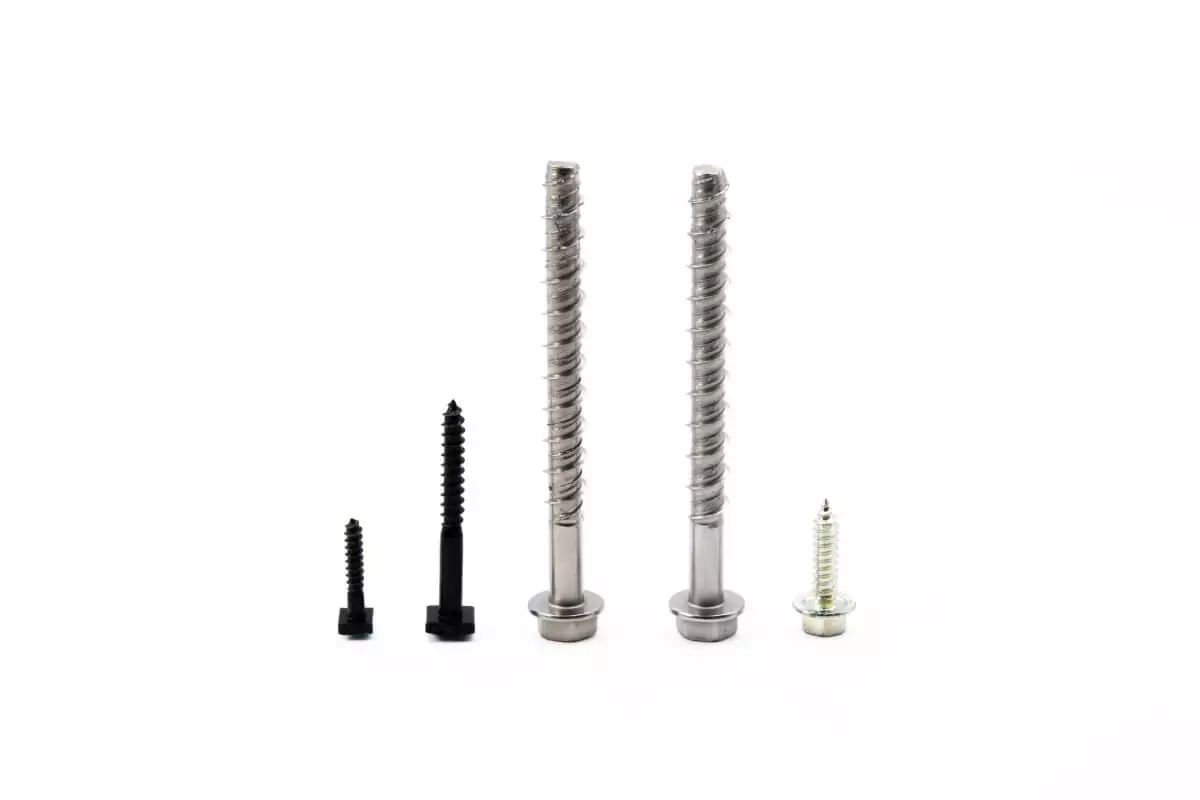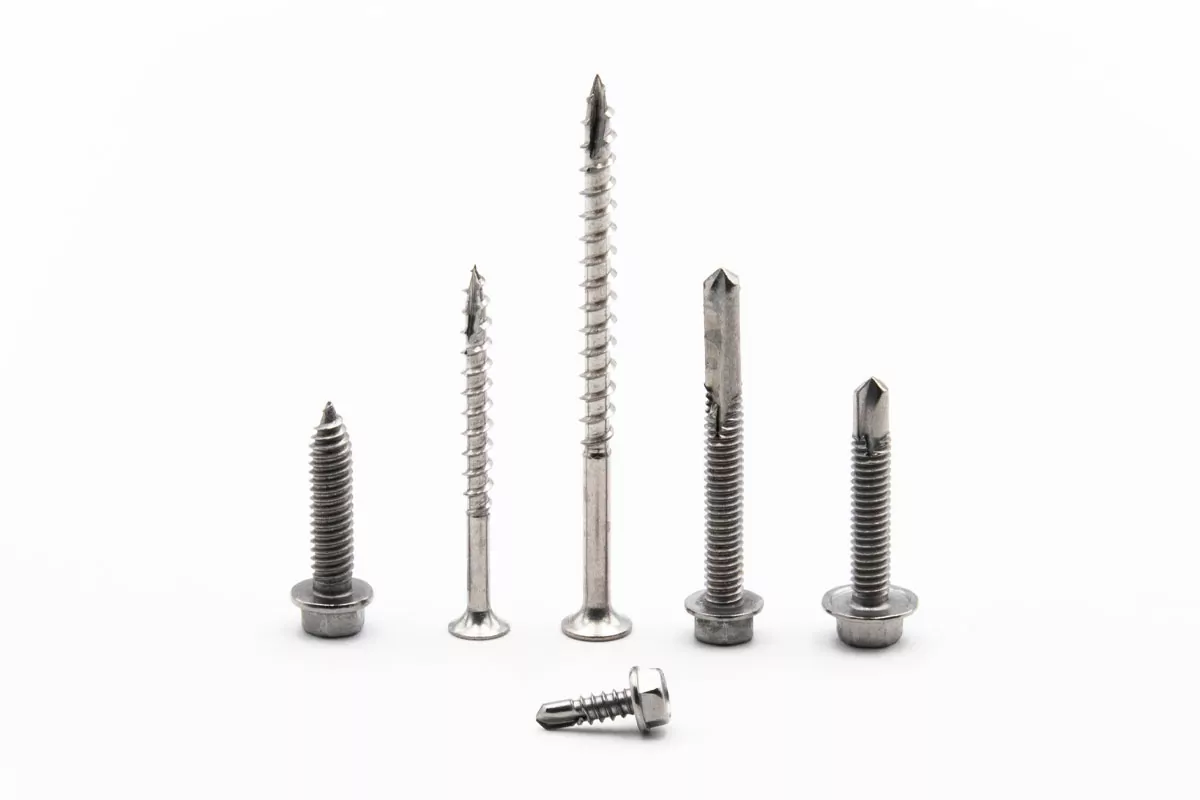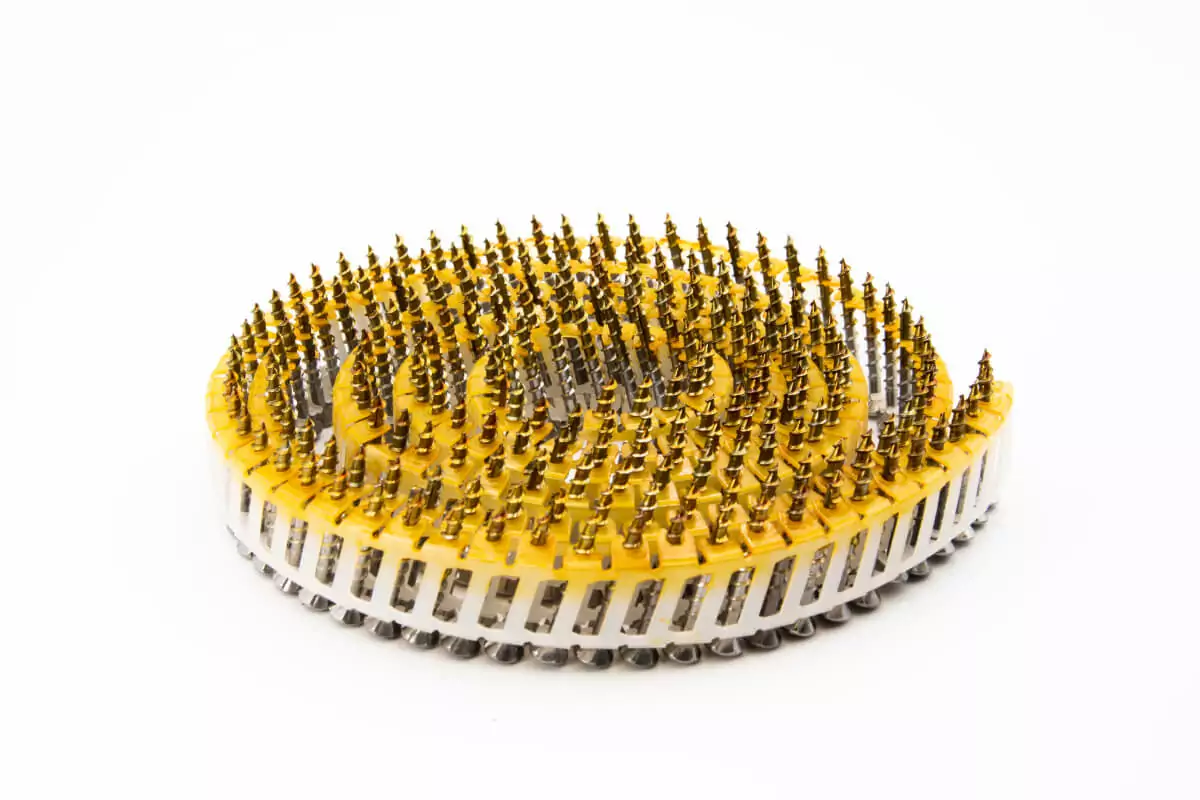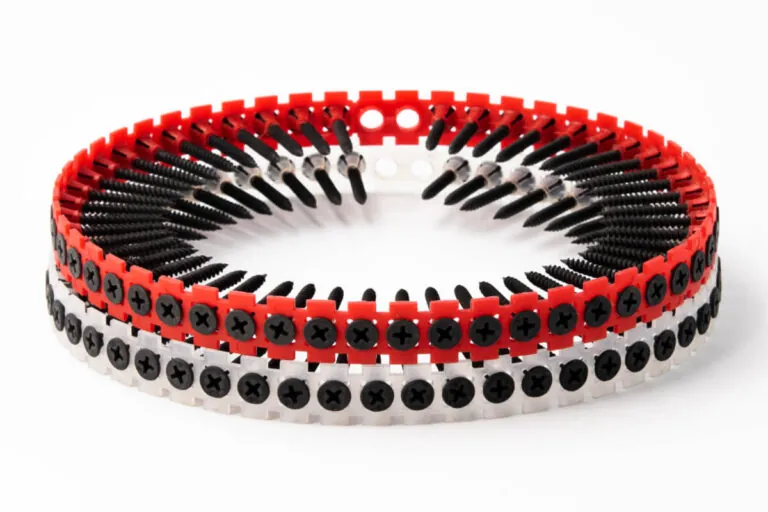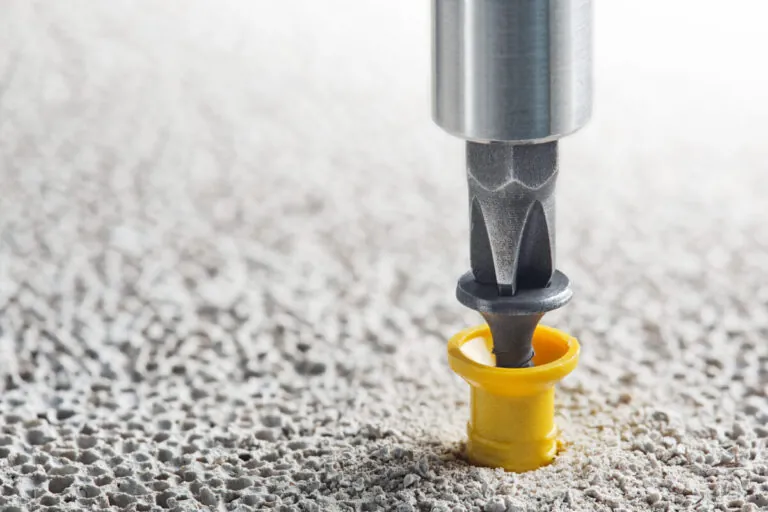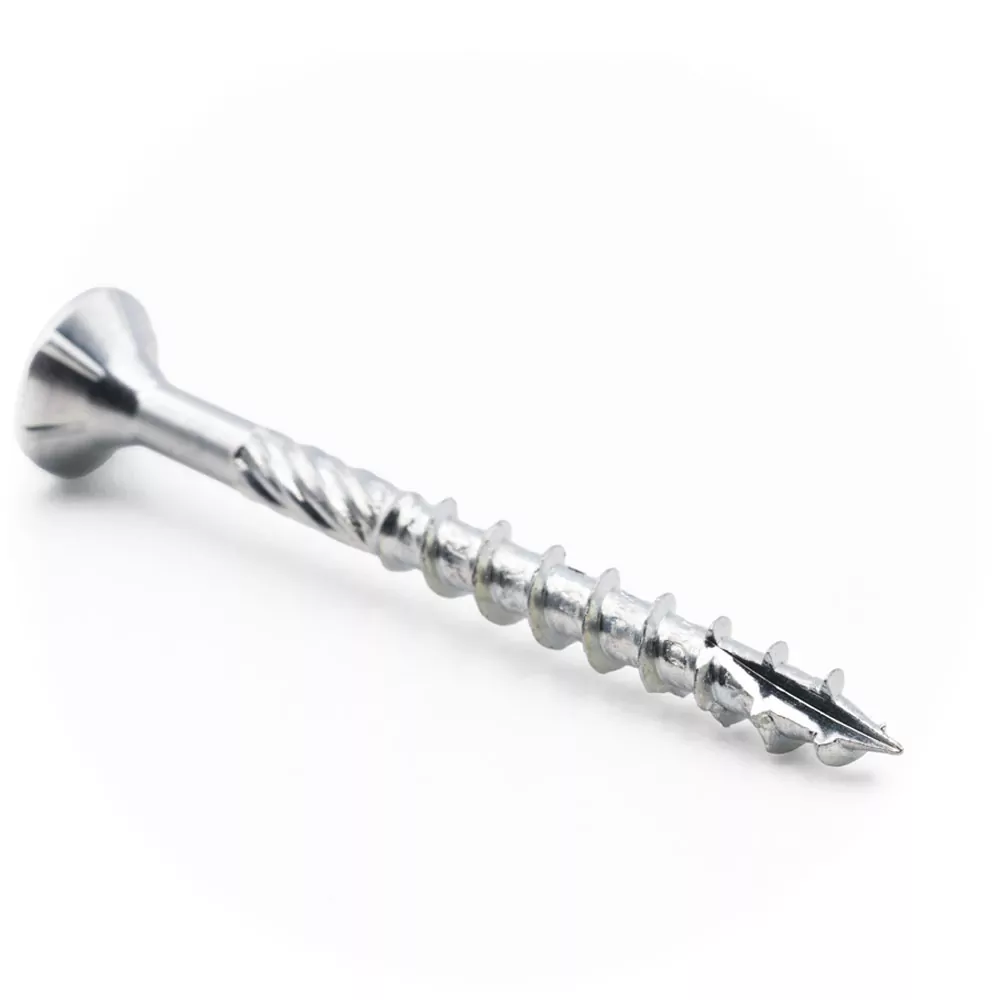


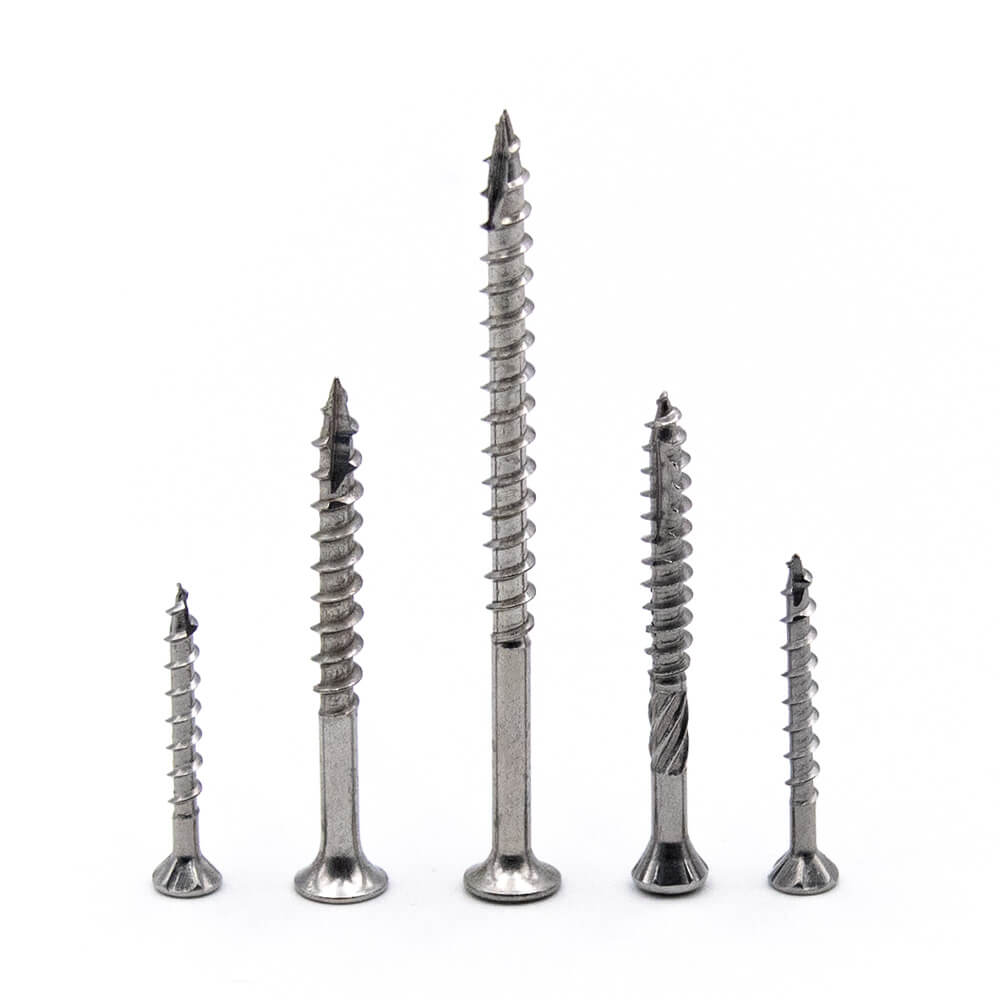
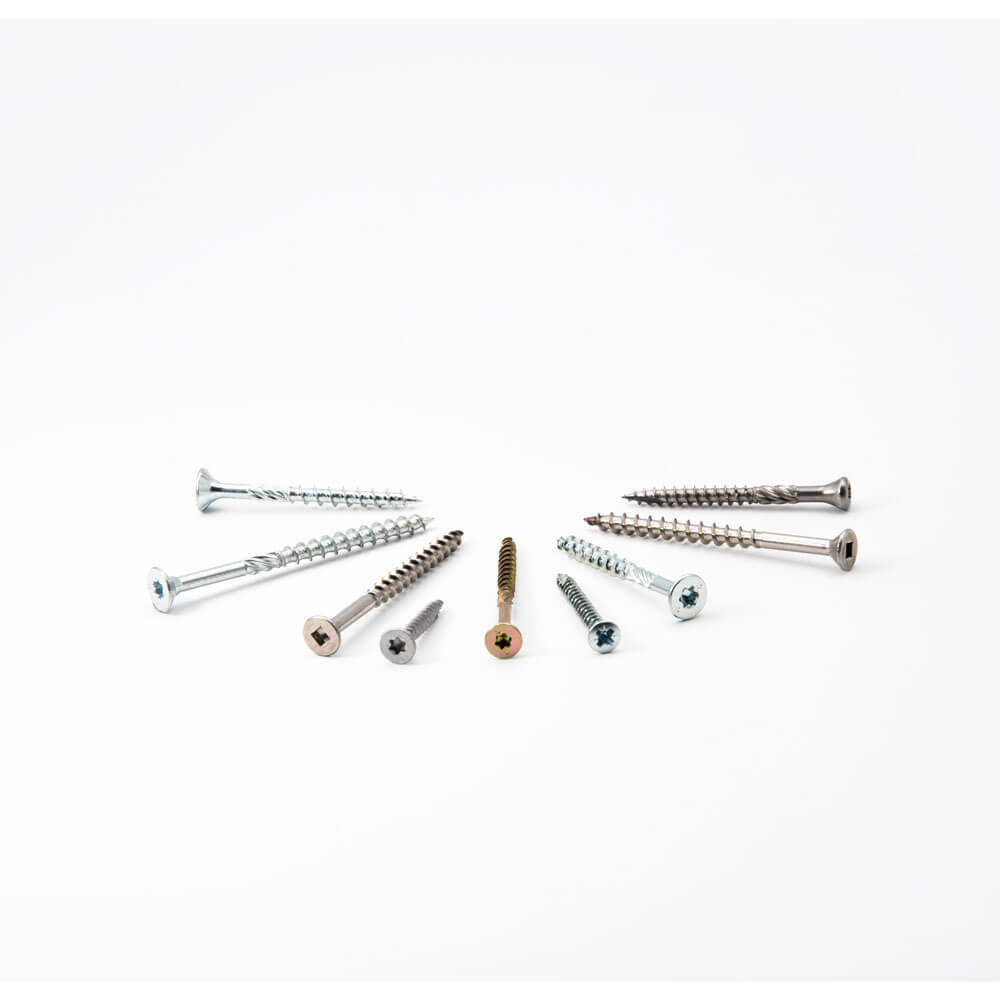
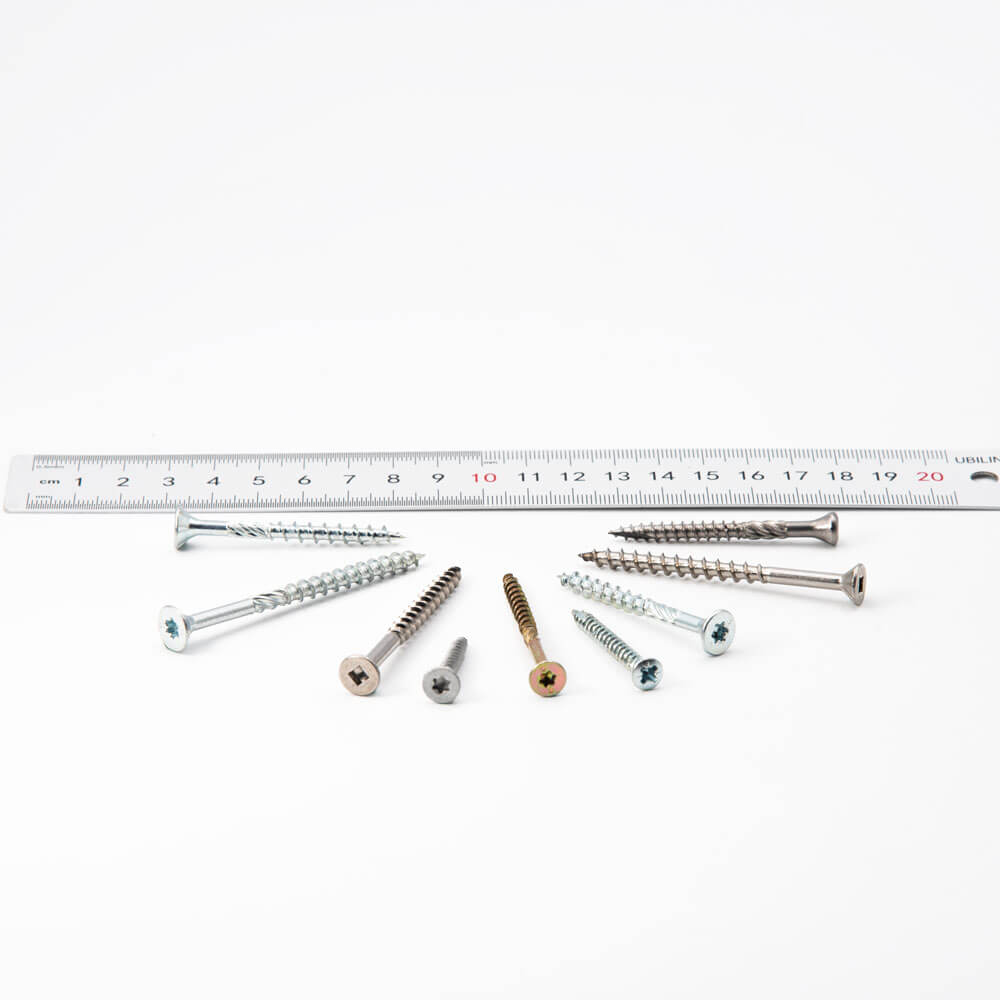
Type 17 screws are a self-tapping wood fastener with a notched tip design that removes timber fibers during installation, allowing the screw to seat flush without pre-drilling or splitting the substrate.
In wood projects a high number of screws are usually required so rapid installation without splitting the wood or the additional pre-drilling step are a big advantage. The type 17 tip is special in that it is able to remove fibers as it is drilled in, making a countersunk flush finish much easier and also allowing for reduced torque for installation. The reduced torque can be particularly useful when working on projects using harder woods that could otherwise require more torque for installation.
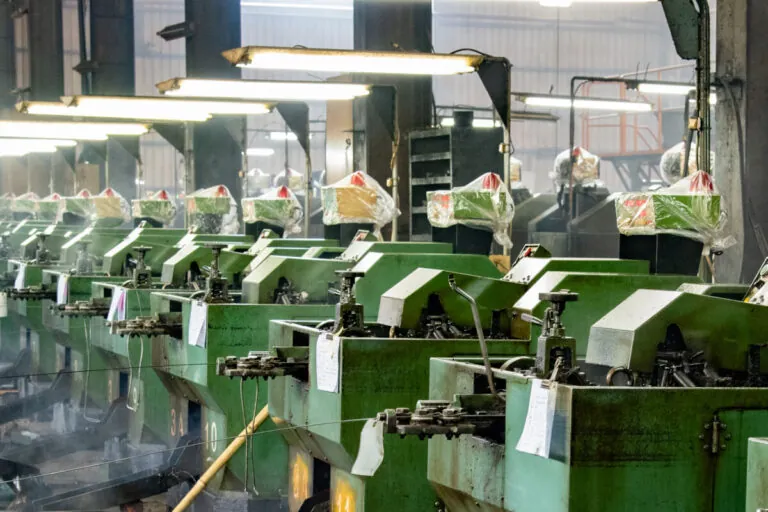
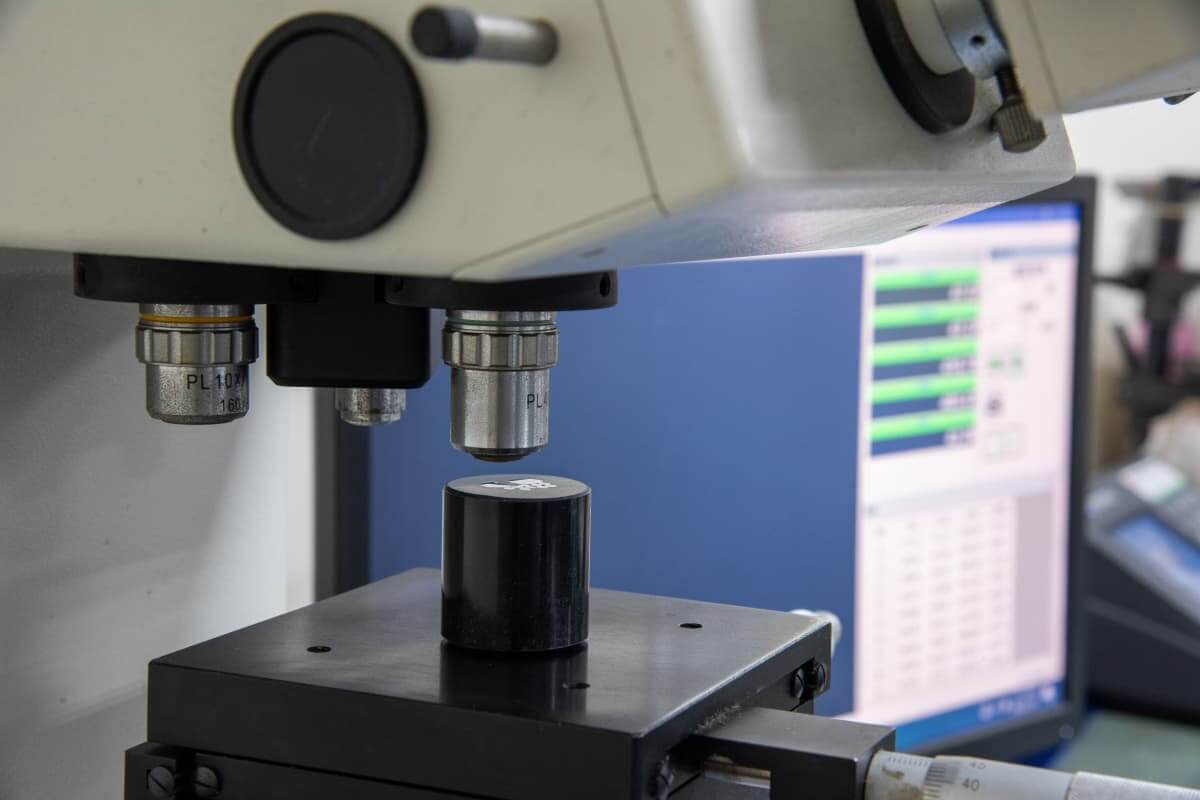
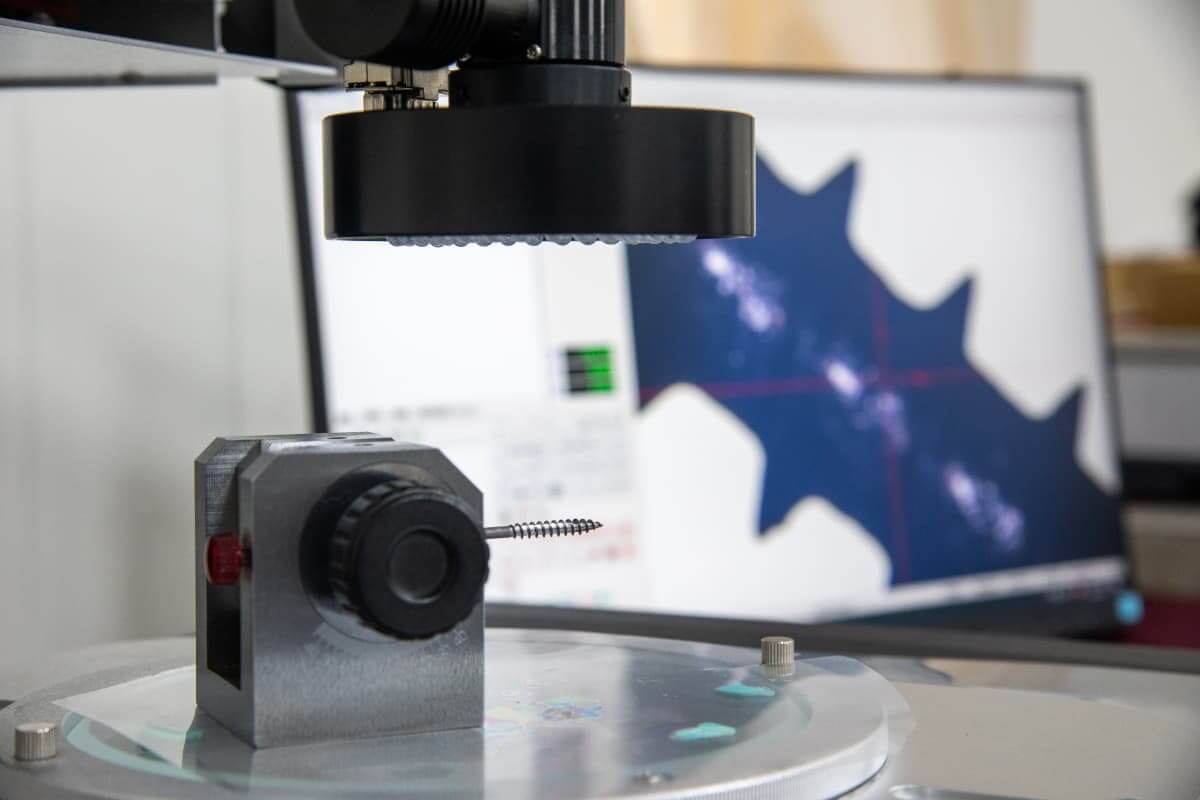
At Cheng Hao, we closely monitor the production and quality inspection of all type 17 screw orders. We take great care in managing every aspect of the manufacturing and quality inspection process, ensuring that our customers receive the best possible stable quality products.
At all of our facilities we have extensive quality inspection systems and we carry out batch inspections for all of our shipments to guarantee quality. If you have particular requirements please let us know and we will be happy to accommodate your needs.
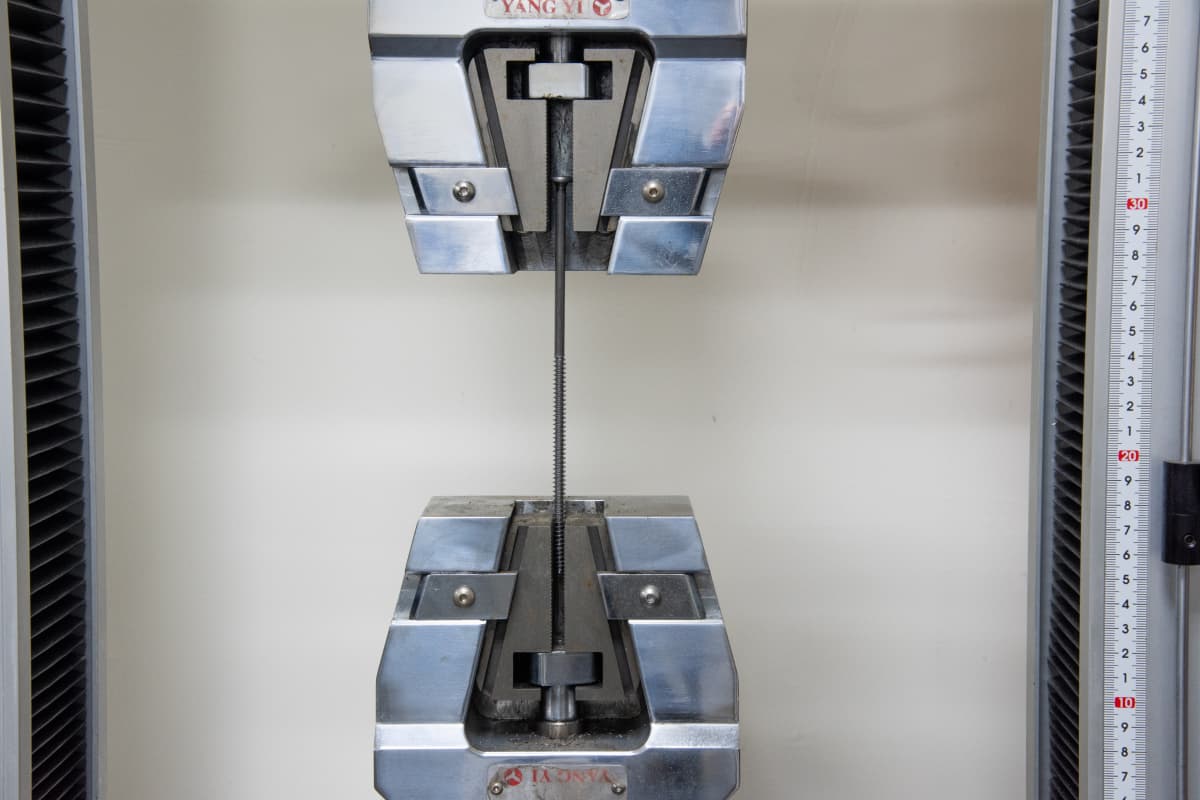
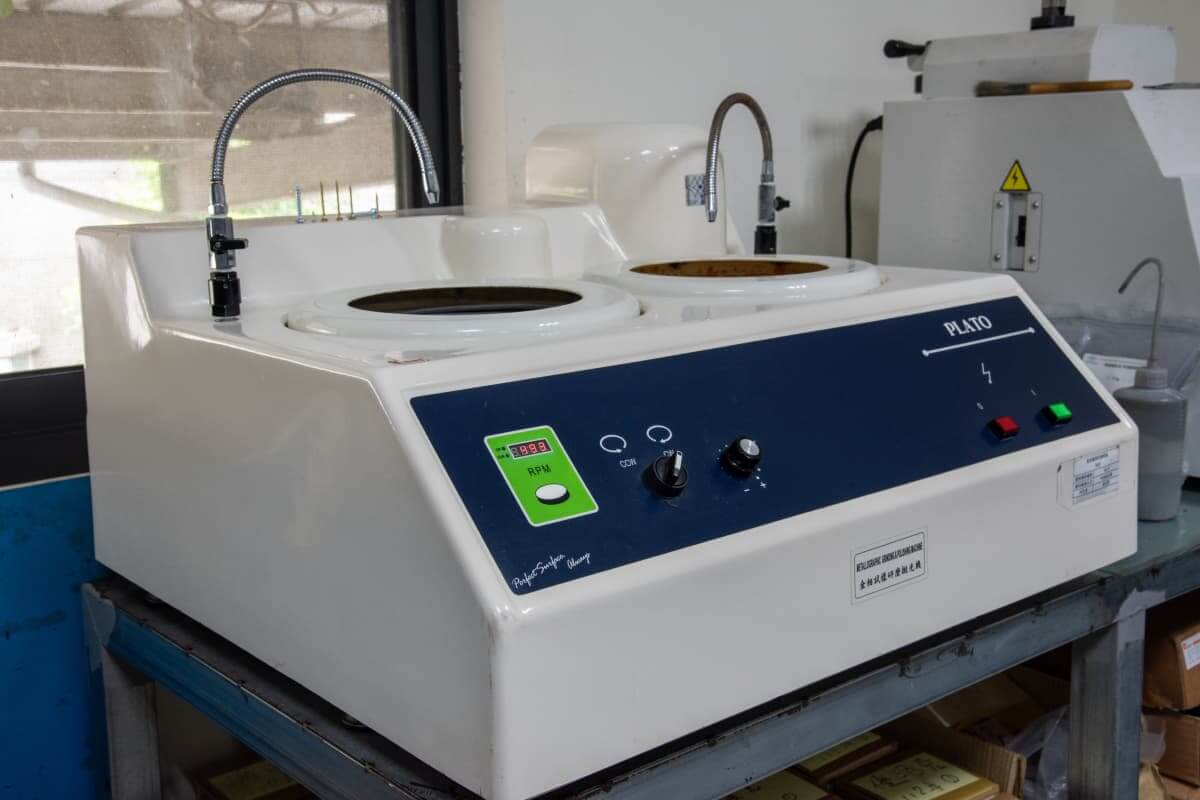
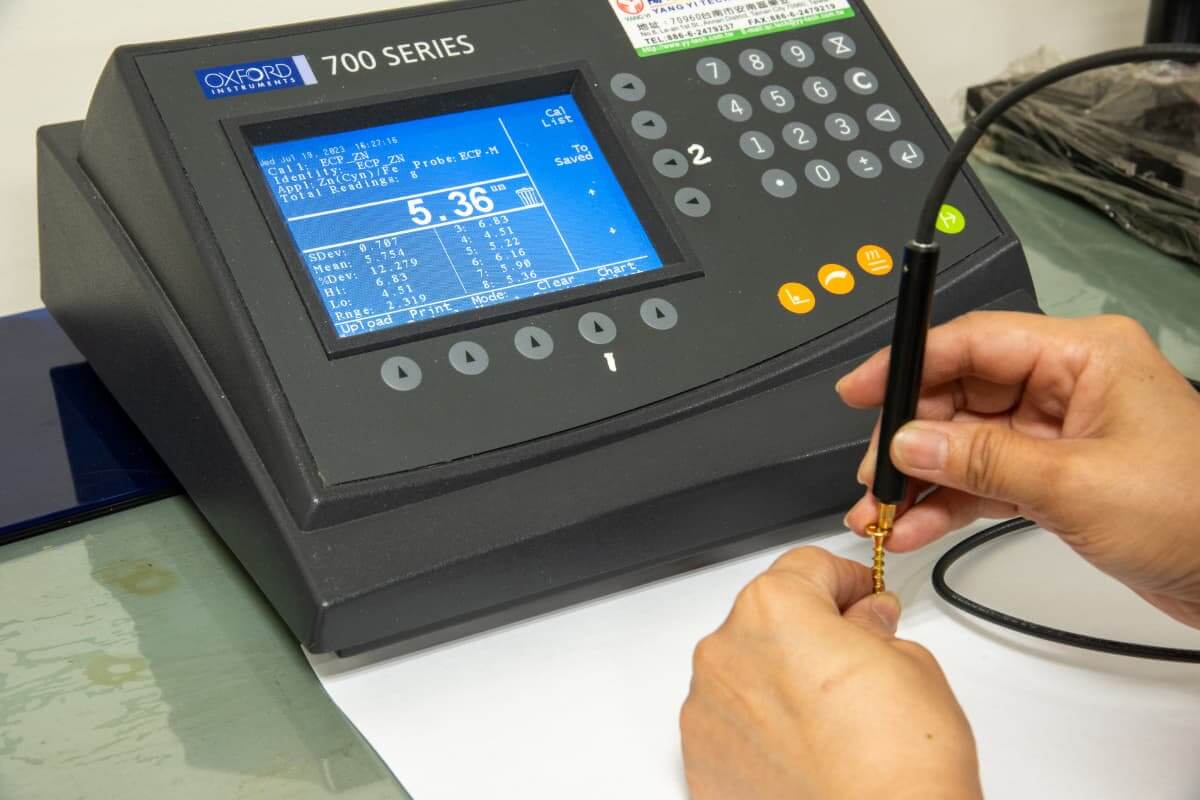

Please check our screw specifications page to see the wide range of options we can supply or contact us now with your detailed requirements.
Choose based on the product’s intended use, application method, and customer requirements.
Commonly used types include SUS302, SUS304, SUS316, SUS410. A special type called NSSC550 is exclusive to Cheng Hao, which has high hardness, high corrosion resistance, and high acid resistance. Its rust prevention is 15 times better than existing materials for screws.
Low carbon steel, medium carbon steel, high carbon steel.
Refers to steel materials that, besides containing carbon, also have other alloying elements such as silicon, manganese, chromium, nickel, vanadium, molybdenum, etc.
Common material codes include 2011, 2024, 6061, 6082, 7075.
Brass (Yellow brass), Bronze.
Choose based on the product’s intended use, application method, and customer requirements.
We can offer customers a wide range of custom packaging options for your orders to suit your particular distribution needs. Please let us know and we will do our best to oblige you with the best packaging option for you.
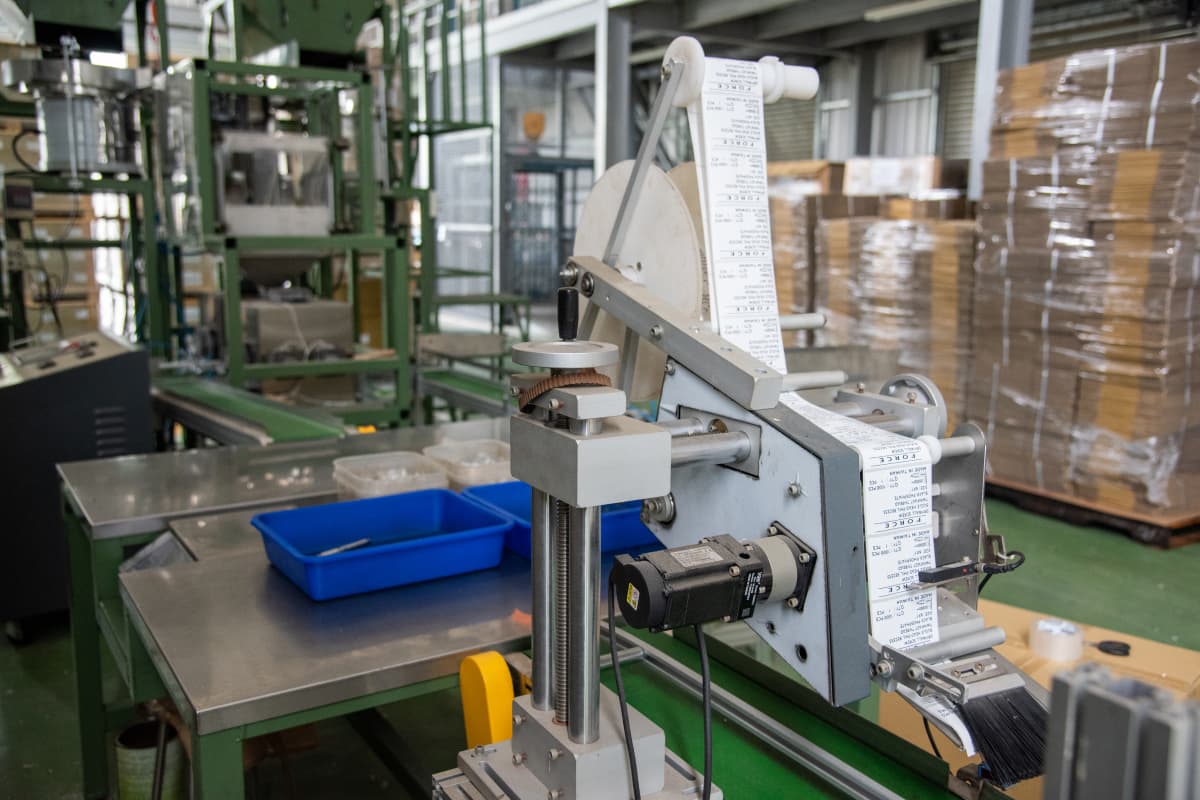
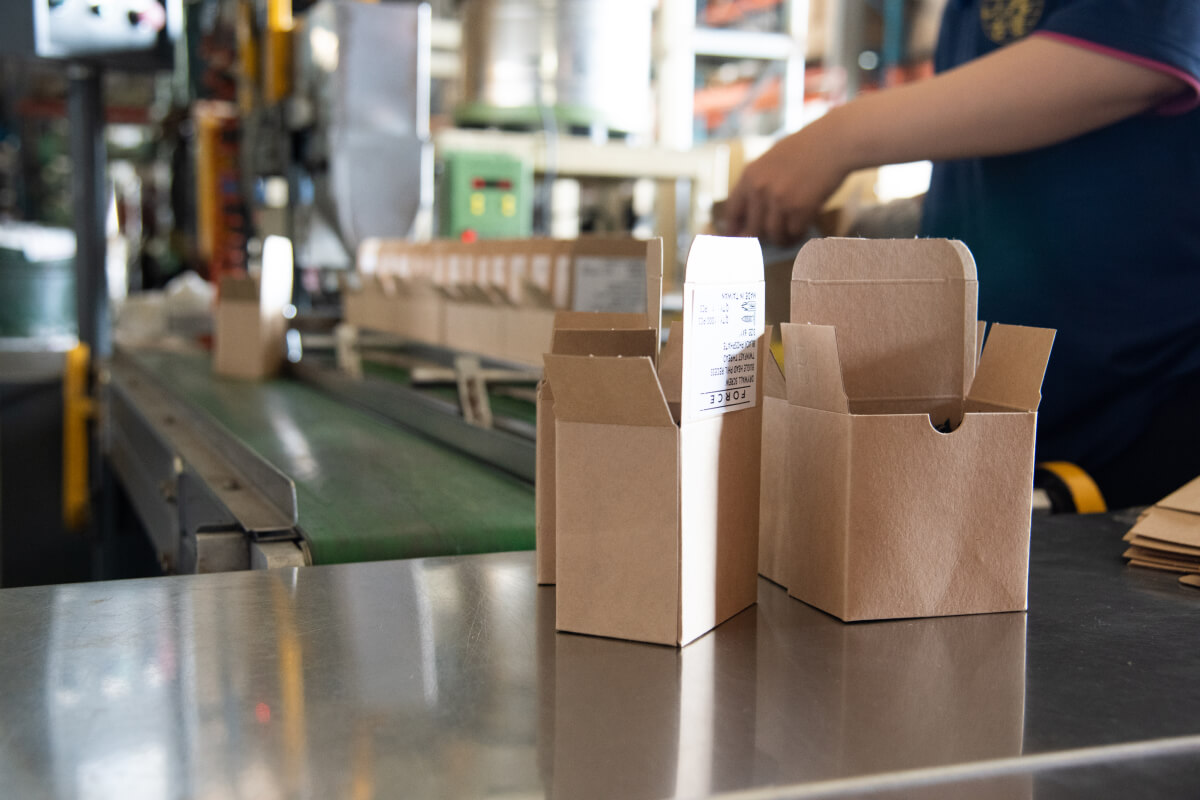

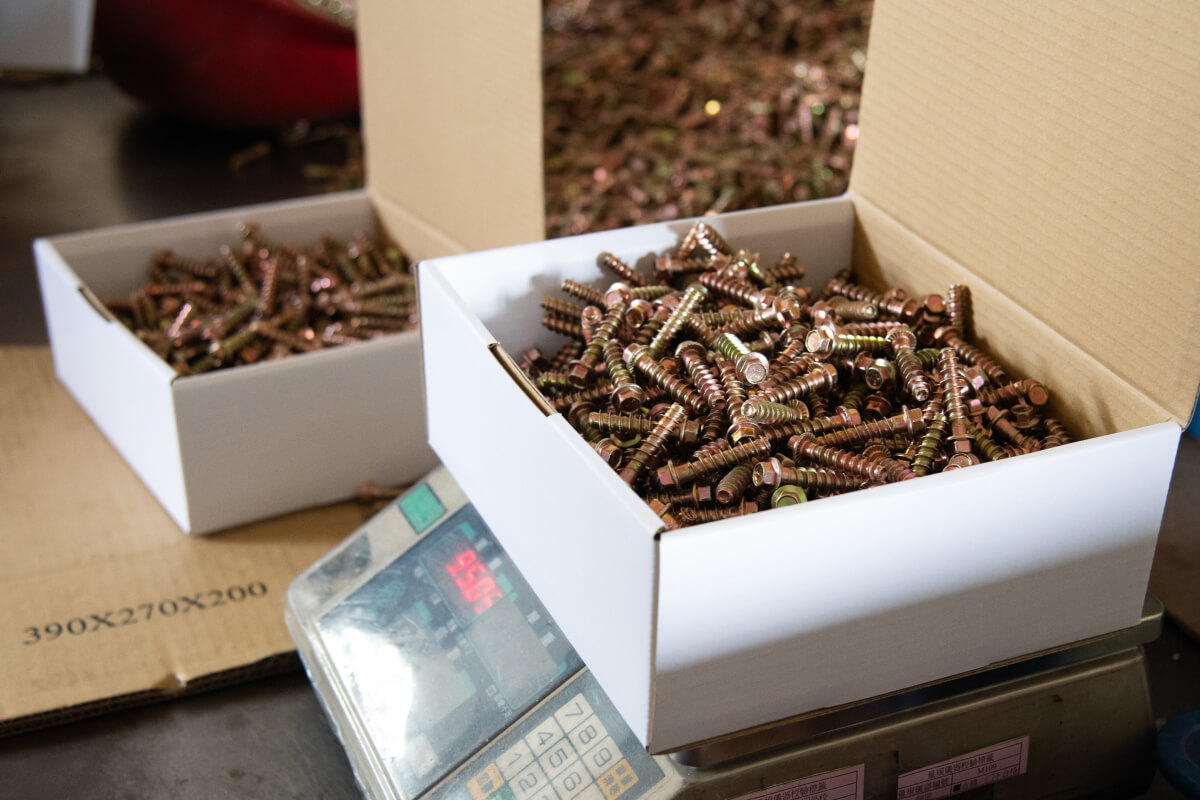
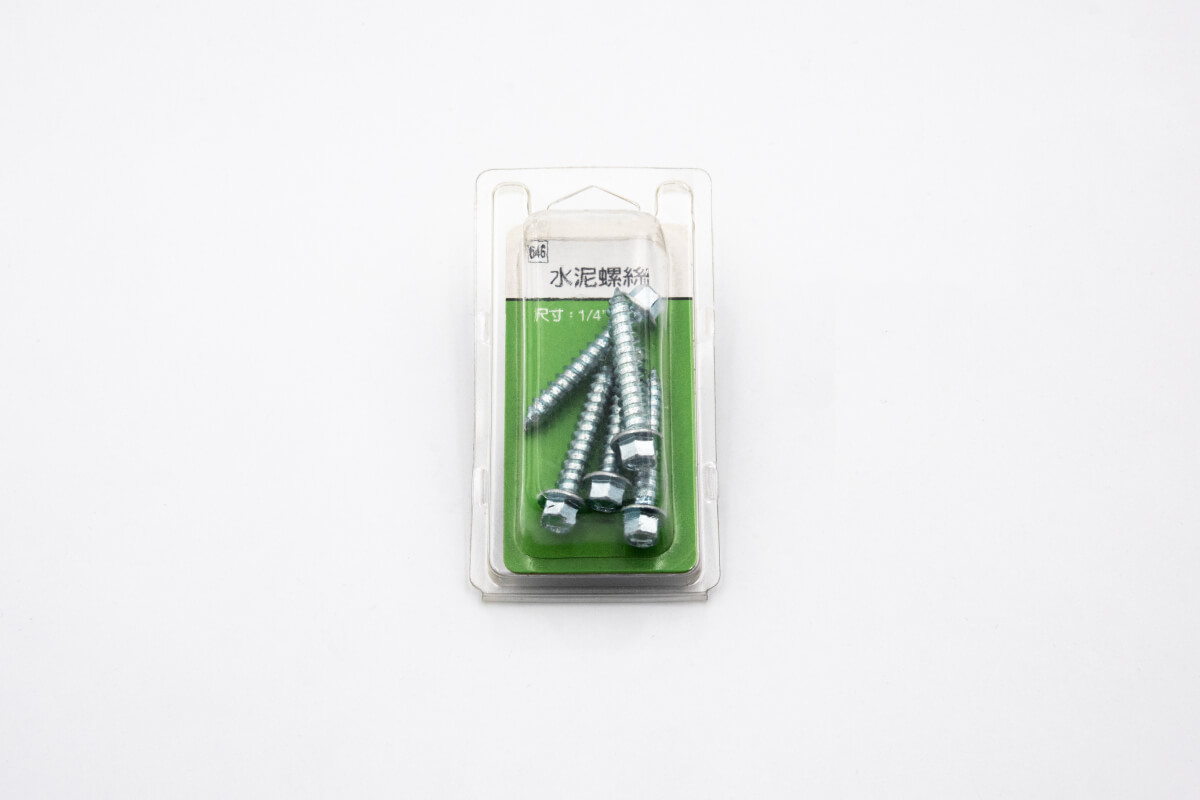


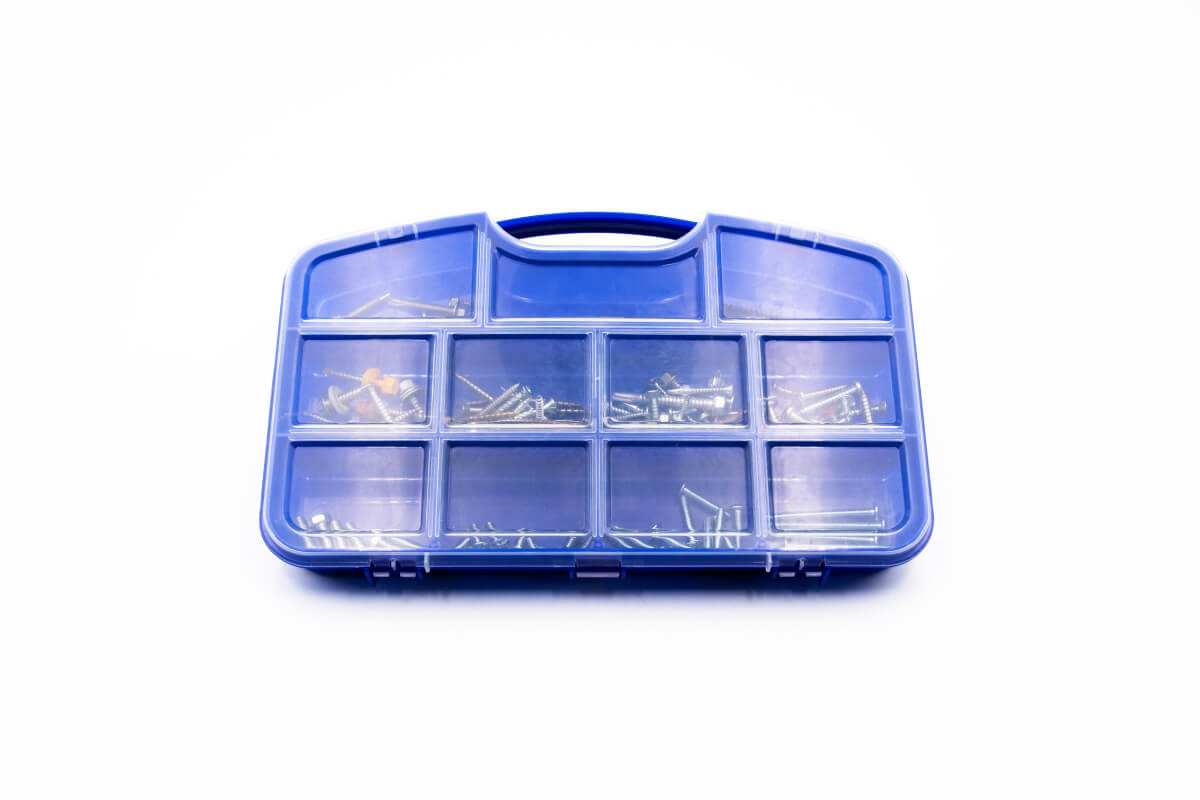
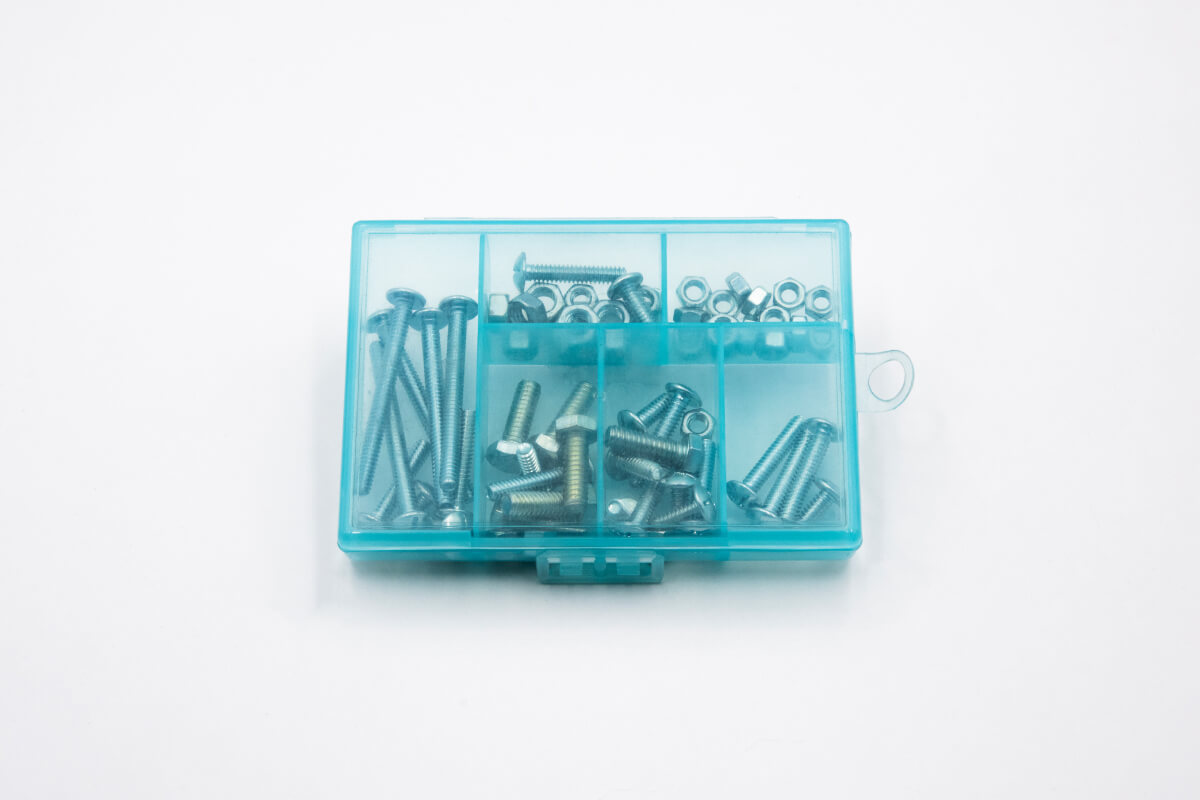
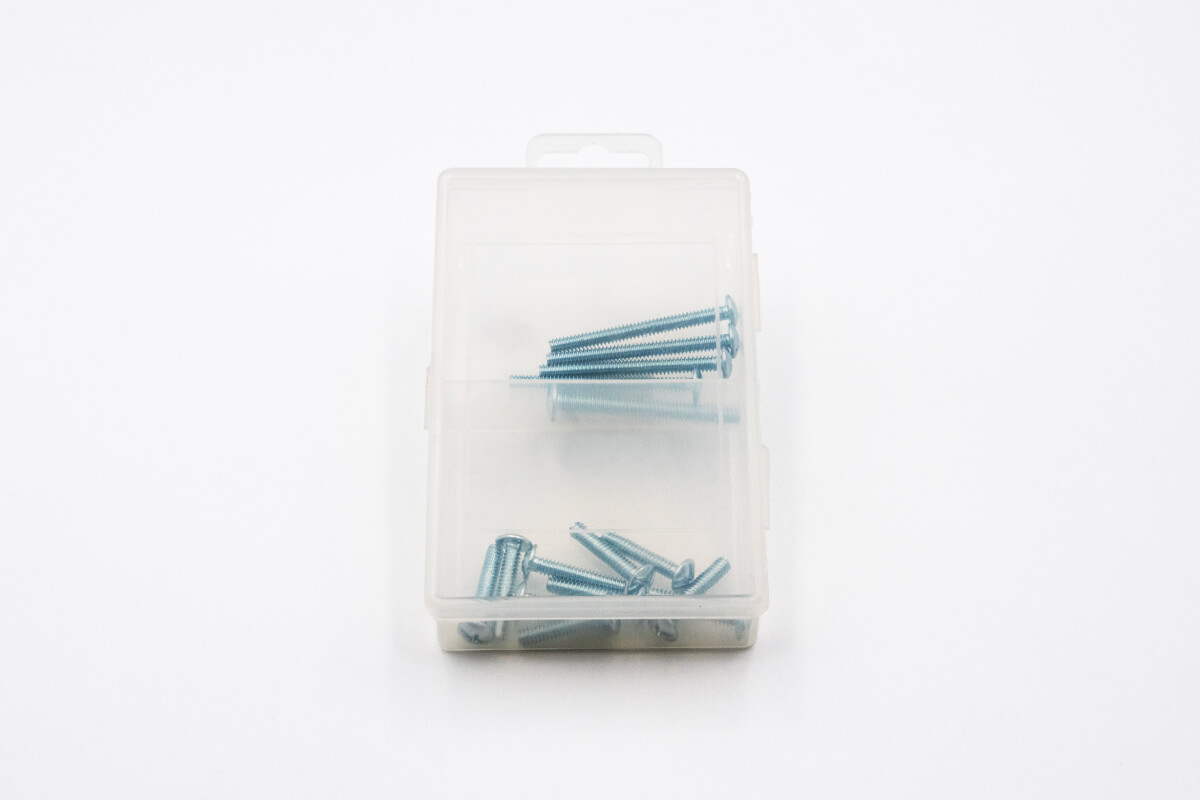
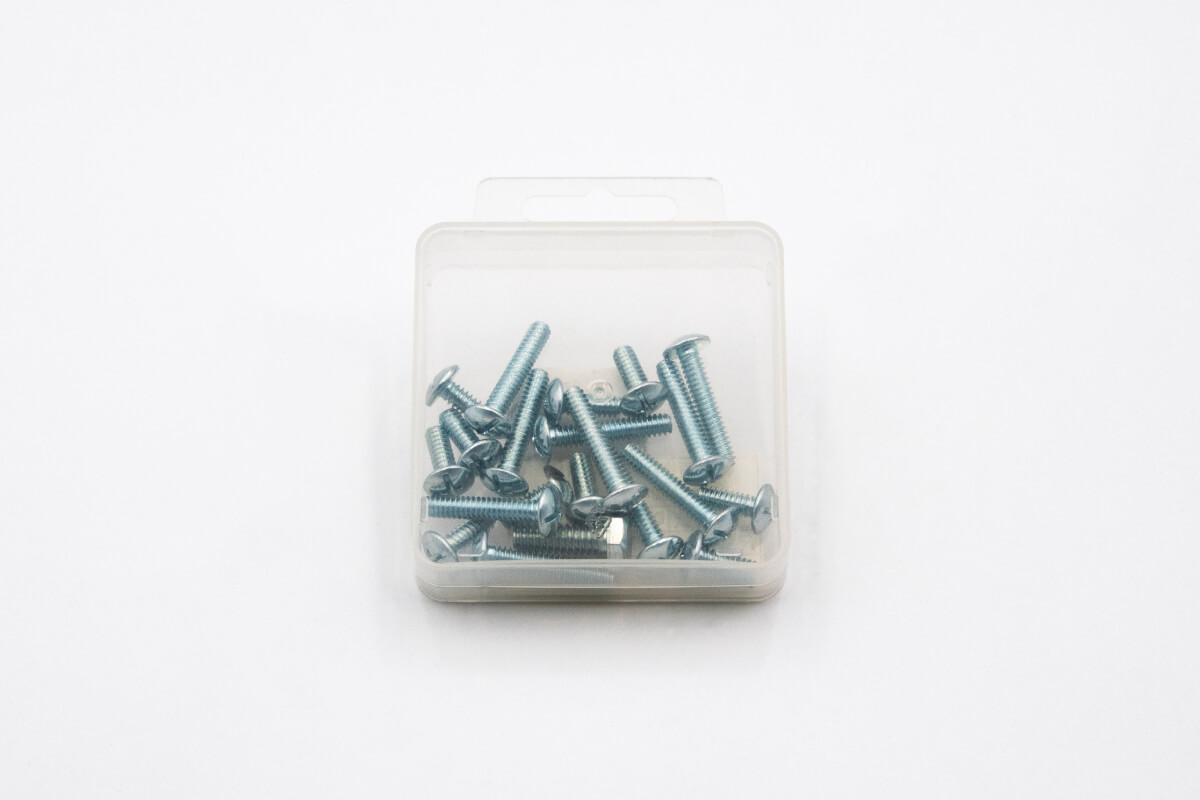
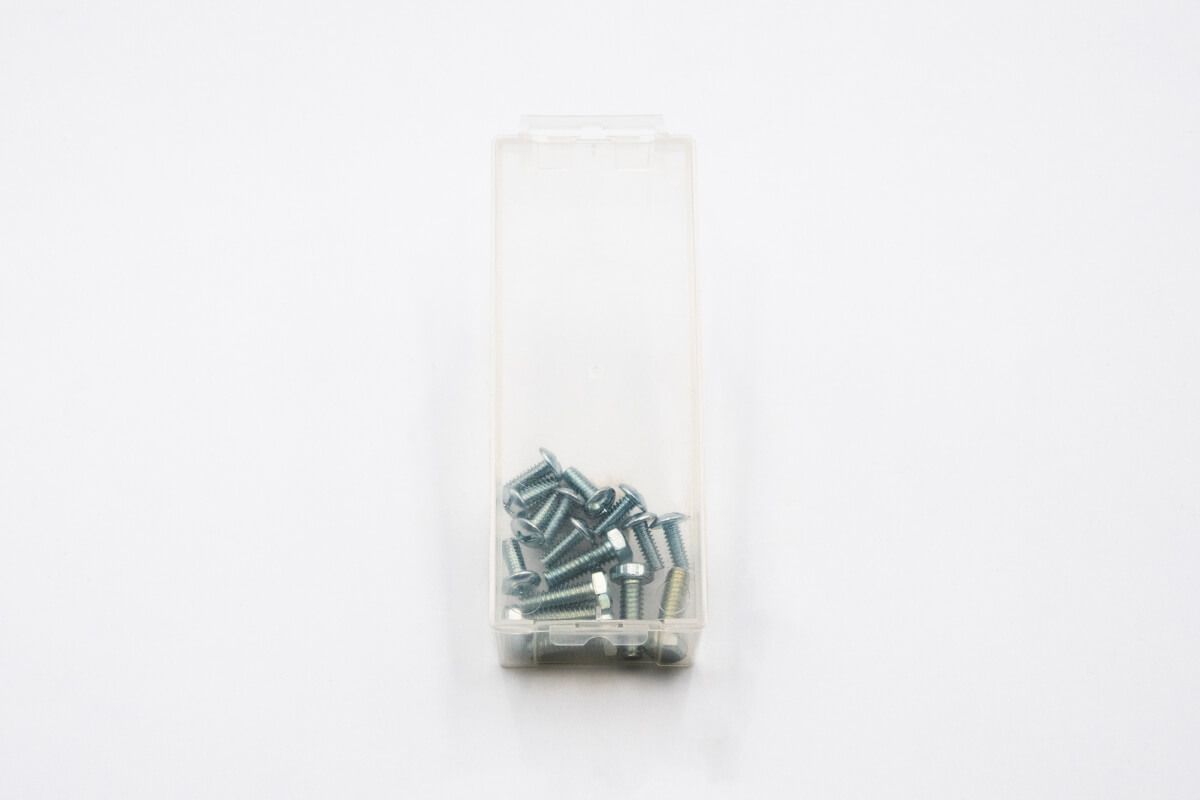
Please view our commonly ordered screw types below or let us know your special requirements for custom screws.
These are some of the most frequently asked questions by our customers. We hope they are helpful to you. If you cannot find the answer you need, please contact us using the inquiry button below.
The Type 17 point features a notched or fluted tip that cuts and removes timber fibers as the screw is driven, rather than compressing them as a standard self-tapping point does. This reduces the splitting force applied to the timber, eliminates the need for pre-drilling in most applications, and allows the screw to seat flush with lower torque.
The practical result for installation crews is faster cycle times, reduced driver wear, and fewer rejects from split or surface-damaged boards. For distributors supplying decking, framing, or timber frame construction markets, these performance characteristics are the primary specification driver when customers are working with dense or brittle timber species.
Type 17 screws are suited to structural softwood framing, hardwood decking, engineered timber products including LVL and glulam, and wood composite decking boards. The notched tip performs particularly well in dense or resinous hardwoods where standard screw points generate high splitting forces.
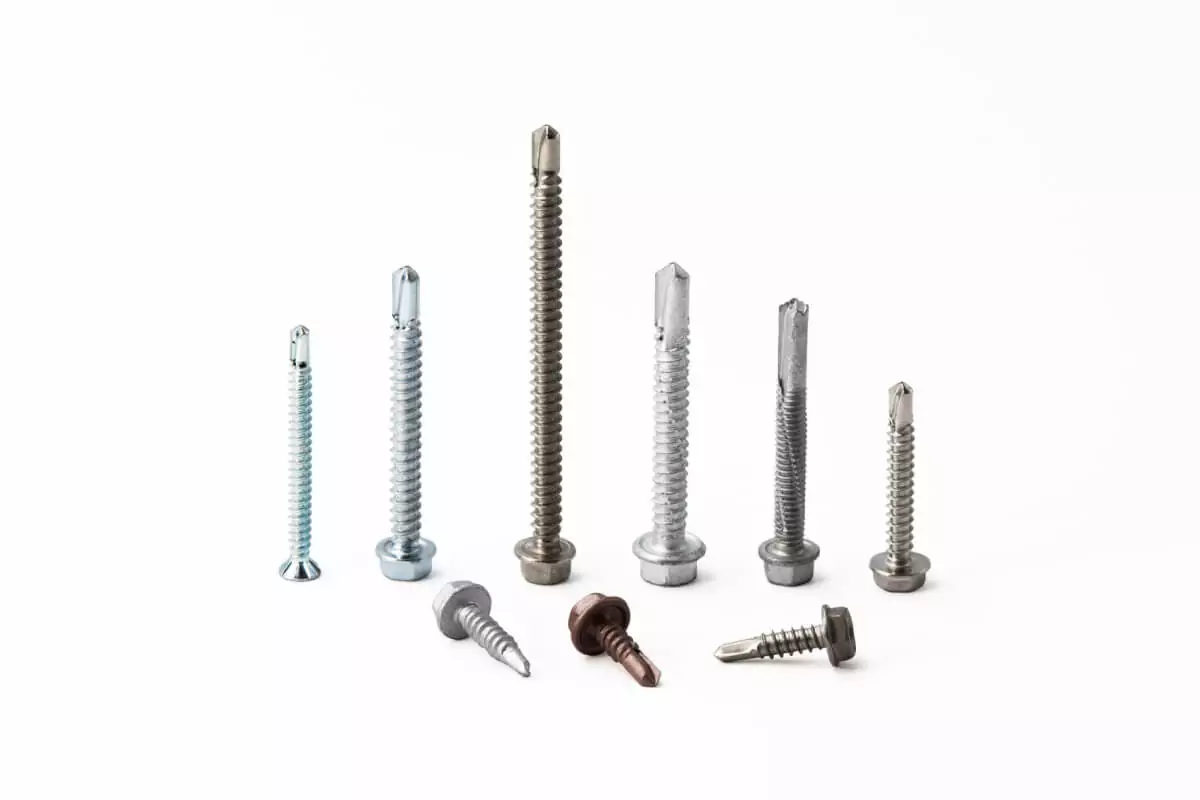
They are not intended for metal fastening applications. For timber-to-metal connections or light steel framing, self-drilling screws with a Tek-style drill point are the appropriate specification. If your customers are working across mixed substrate types, we can supply both configurations as part of a consolidated order.
Type 17 screws are most widely specified under Australian Standard AS 3566, which governs self-drilling and self-tapping screws for the Australian and New Zealand construction markets. This standard covers dimensional requirements, mechanical properties, and corrosion resistance classifications.
We manufacture to AS 3566 for customers supplying the Australian and New Zealand markets and to ISO and DIN standards for European markets where timber screw specifications differ. If your target market has a specific regional standard or customer specification, confirm the requirement at inquiry stage and we will verify compliance before sampling.
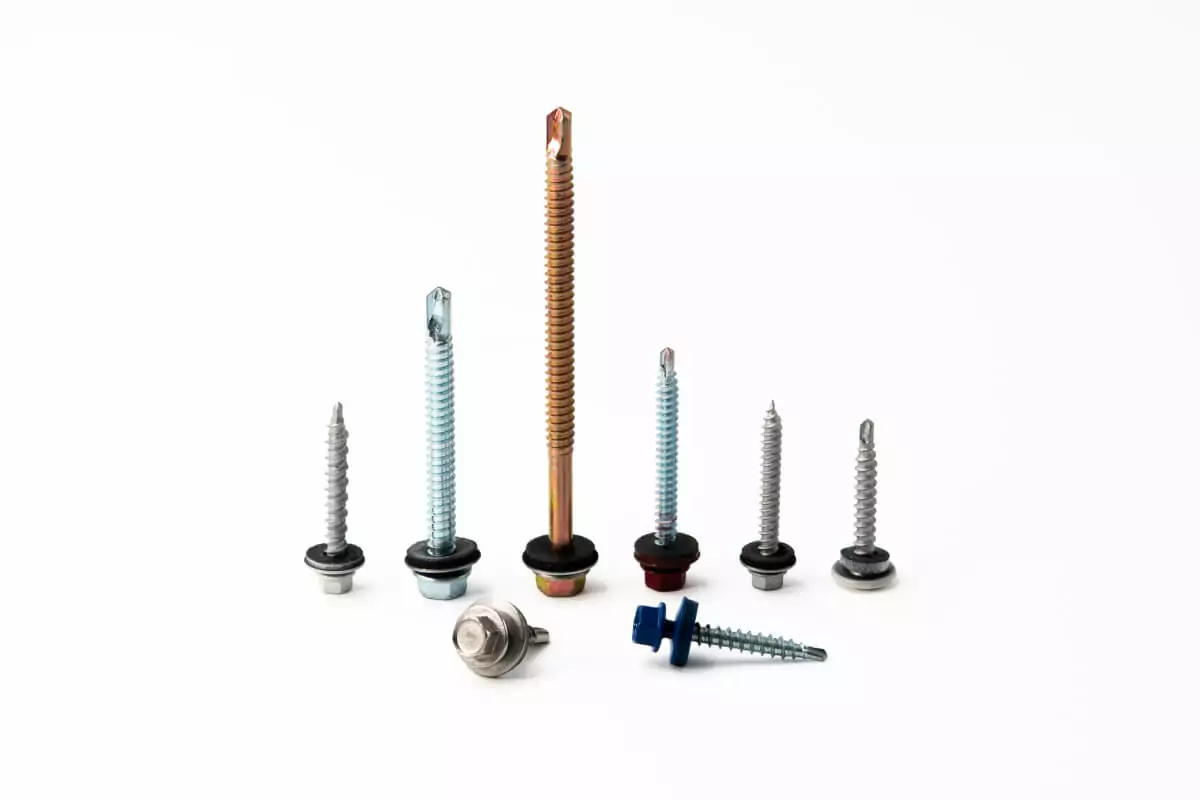
Standard head options include countersunk flat head and bugle head profiles, which are the most common configurations for decking, subfloor, and framing applications. Pan head and hex washer head variants are also available for applications where a flush finish is not required.
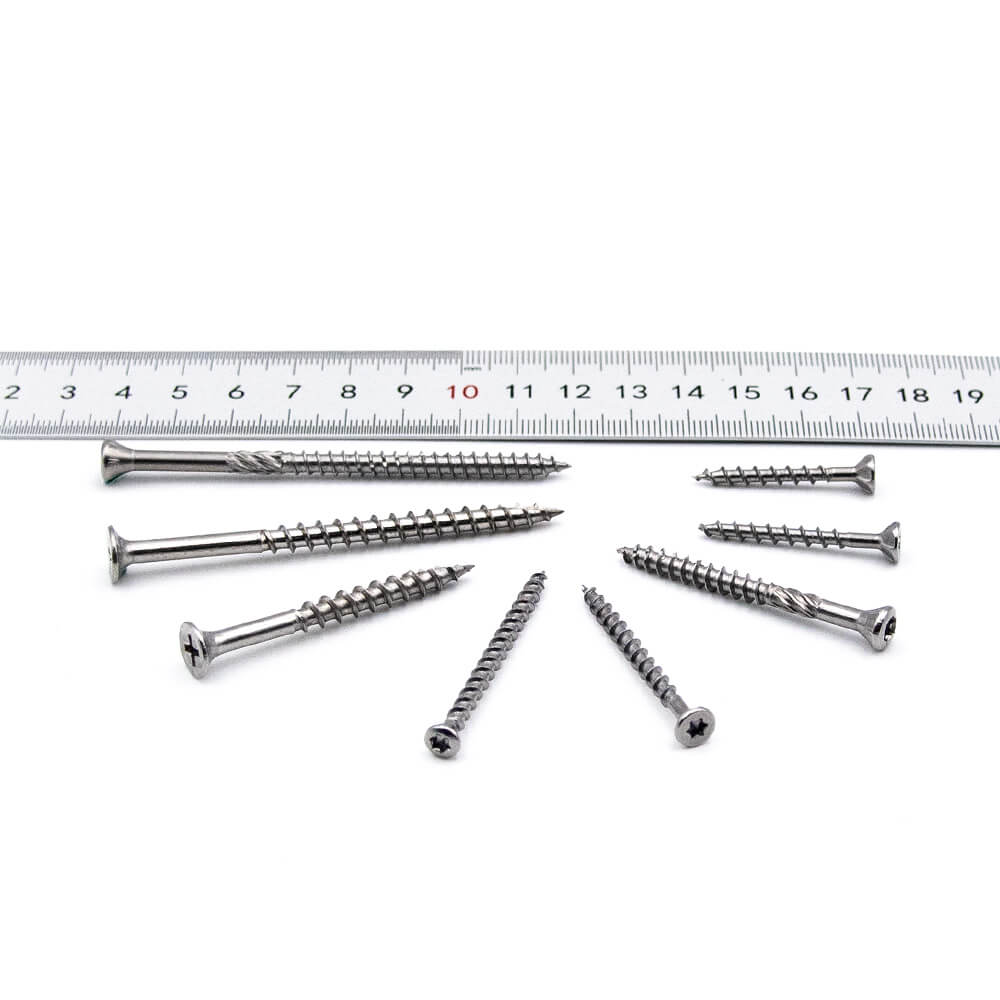
Drive options include Phillips, Square (Robertson), Torx, and combination configurations. Square drive is commonly specified in North American markets for its positive bit engagement and resistance to cam-out under high-torque installation. Torx drive is increasingly specified in European timber construction for the same reason. We configure the drive recess to match the installation tooling your customers are using.
We supply Type 17 screws across a standard range covering diameters from approximately 8 gauge through 14 gauge and lengths from 25mm through 150mm. Custom lengths and gauges outside this range are available on request where application requirements justify the tooling setup.
For decking applications, length selection is determined by board thickness and the substrate beneath it, with full thread engagement into the joist or bearer being the critical parameter. If your customers require guidance on length selection for a specific decking or framing system, we can provide a reference chart as part of our product documentation.
Standard options include zinc electroplating, yellow zinc, and Ruspert silver for carbon steel grades. Black phosphate is available for interior framing applications. Stainless steel grades 304 and 316 are available as alternatives to surface-treated carbon steel where long-term outdoor corrosion resistance is required.
For coastal construction and high-humidity environments, we recommend grade 316 stainless steel or Ruspert silver coated carbon steel depending on the budget and performance specification. Salt-spray test data for each coating option is available on request and can be supplied as part of the documentation package for your technical sales team.
Yes. We supply Type 17 screws in grade 304 and grade 316 stainless steel. Grade 304 is appropriate for general outdoor and protected exterior applications. Grade 316 is specified for coastal environments, marine-adjacent construction, and applications where chloride exposure is a factor.
Our duplex stainless steel grade NSSC 550 is also available for high-performance applications where standard 316 stainless is insufficient. NSSC 550 offers substantially higher corrosion resistance than conventional stainless grades. If your customers are supplying into coastal, industrial, or chemically aggressive environments, this grade should be evaluated as an option.
Yes. We supply Type 17 screws under OEM and private label arrangements for hardware distributors, retail chains, and branded construction fastener lines. Packaging options include custom printed cartons, retail-ready display boxes, and bulk contractor packaging in boxes or buckets.
Packaging specifications are developed during the sampling process and aligned with your category requirements. For retail customers, we can accommodate barcode and planogram requirements specific to your market. For trade and contractor channels, we can configure bulk packaging formats to match the purchasing patterns of your customer base.
Yes. Matching an existing product to specification is a standard part of our sampling process. Supply a physical sample of the current product and we will manufacture a matched sample for your evaluation and approval before any production commitment is made.
Where the geometry, coating, and material of your existing product are known, a specification sheet is sufficient to begin the process. We confirm in writing any deviations from your current product before proceeding, so your technical team can evaluate whether the matched sample meets your performance criteria.
To quote accurately we need the diameter and length, head style and drive recess, material and surface treatment, any applicable standard or regional certification requirement, and your packaging format. Estimated annual volume is required to confirm pricing and lead time.
If you have an existing product you want replicated, a physical sample or technical drawing reduces the specification process considerably. We confirm lead times based on whether the specification is within our standard tooling range or requires a custom setup. Custom specifications typically require additional lead time for tooling production and sample approval before mass production begins.

| Service | Cookies | Description |
|---|---|---|
| Google Analytics | _gat_gtag, _ga, _gid | Used to distinguish users and sessions for web statistics purposes. |
| Service | Cookies | Description | |
|---|---|---|---|
| Google Analytics | _gat_gtag, _ga, _gid | Used to distinguish users and sessions for web statistics purposes. |