
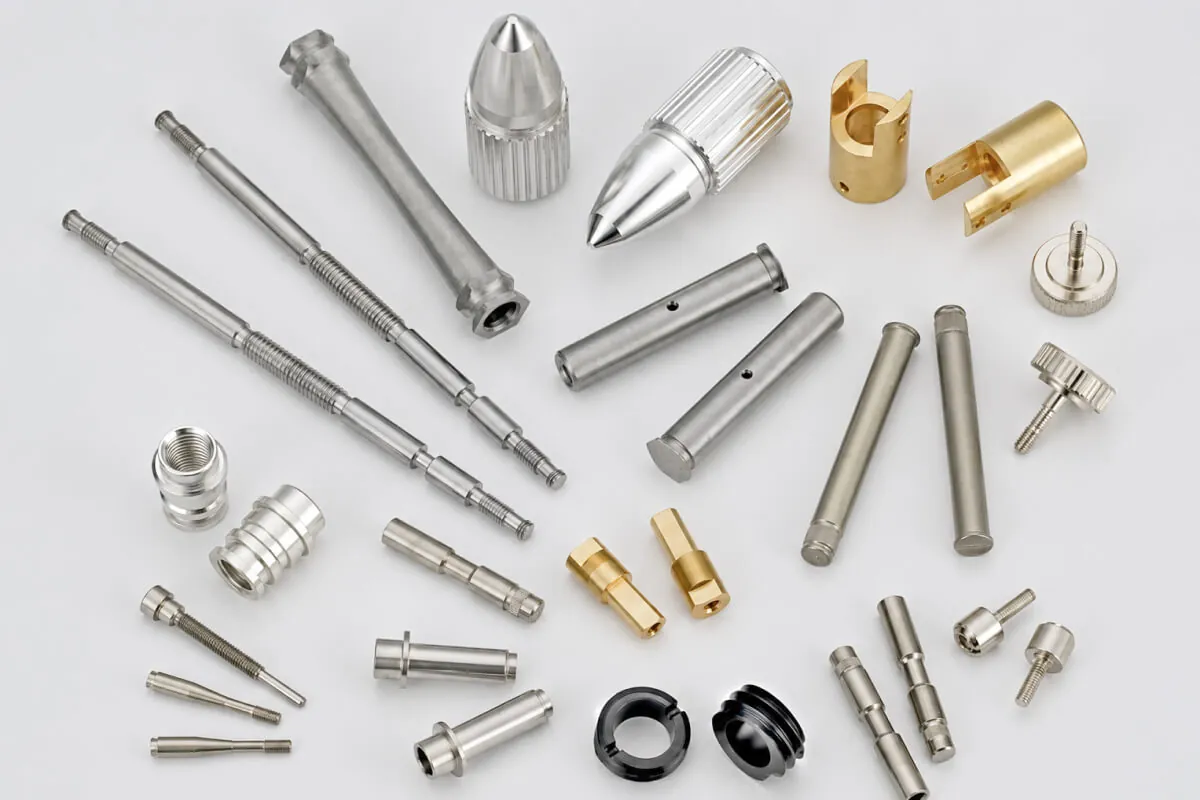
Custom CNC fasteners are non-standard bolts, shoulder screws, and stepped screws machined from a drawing rather than cold-formed to a catalog specification. Cheng Hao produces them in carbon steel, stainless steel, alloy steel, aluminum, and copper, working directly from your CAD or STEP file. Minimum order quantity is quoted per part, and custom parts typically ship in 30 to 75 days.
Table of Contents
Most fastener requirements are met by a standard part or a lightly modified one. Some are not. If you need a head that clears a housing wall by a fraction of a millimeter, or a precision-ground shoulder that no die produces, cold forming runs out of room. That’s the gap our CNC parts manufacturing line was built to fill, using the same material control and volume production we apply to standard fasteners.
This article is written for distributors, OEM buyers, and machine builders who already source fasteners and need parts that sit outside the catalog.
When do standard screws stop being enough?
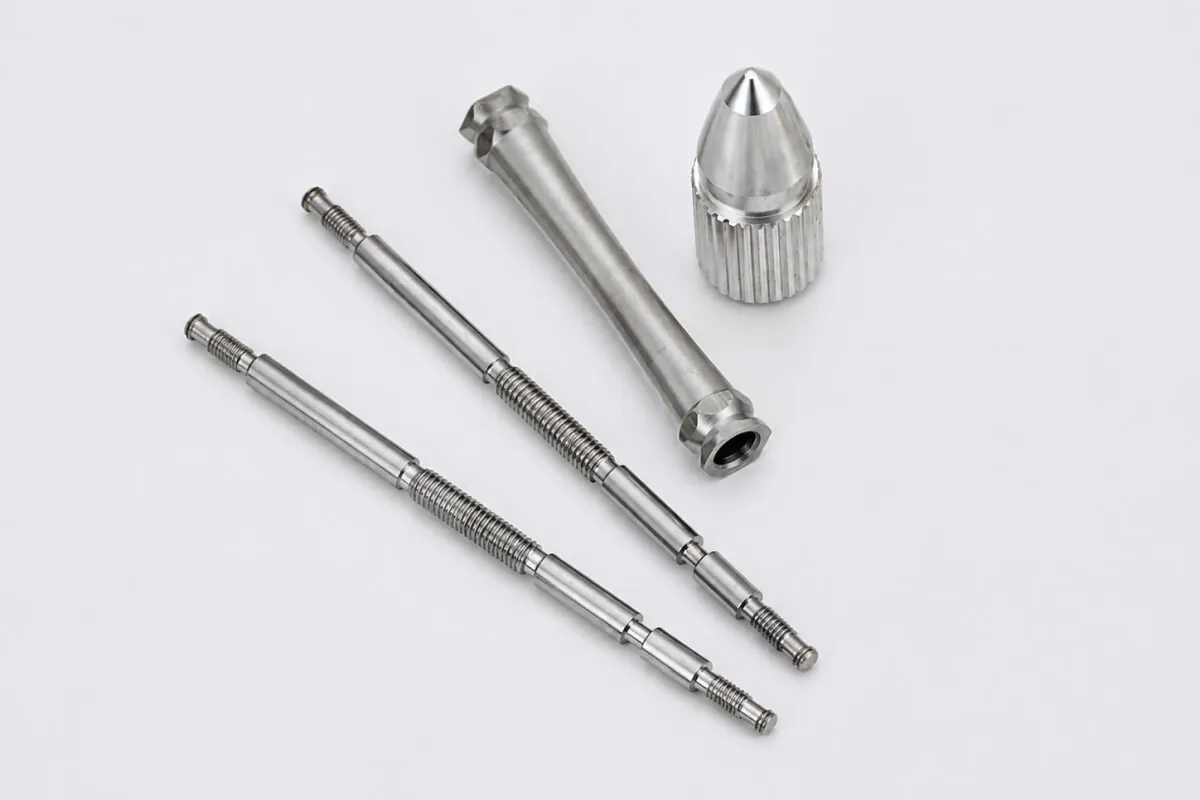
Standard screws stop being enough when the assembly dictates the fastener geometry instead of the other way round. Machinery interiors rarely leave generous space, and a servo motor mount, a sensor bracket, or the end of a precision slide rail often calls for a head profile, thread length, or step dimension that no stocked part matches.
Where the constraints show up
Servo mounts and sensor frames tend to be the tightest. If your head is a millimeter too tall, it fouls the next component; if a thread is a pitch too long, it bottoms out before it clamps. Slide-rail ends and traversing assemblies bring a different demand, since the fastener there often doubles as a locating feature and can’t be allowed to wander within a loose clearance.
What cold forming cannot reach
Cold forming is fast and economical at volume, but it works within the limits of the die. Complex stepped profiles, very tight tolerances, and unusual thread and head combinations either can’t be formed at all or would need tooling that makes little sense for a specialized part. Machining removes that constraint, cutting the geometry from bar stock rather than pressing it into shape. The cost is cycle time, which is why the method suits parts where geometry, not raw output, is the deciding factor.
Special bolts and shoulder screws machined to your drawing
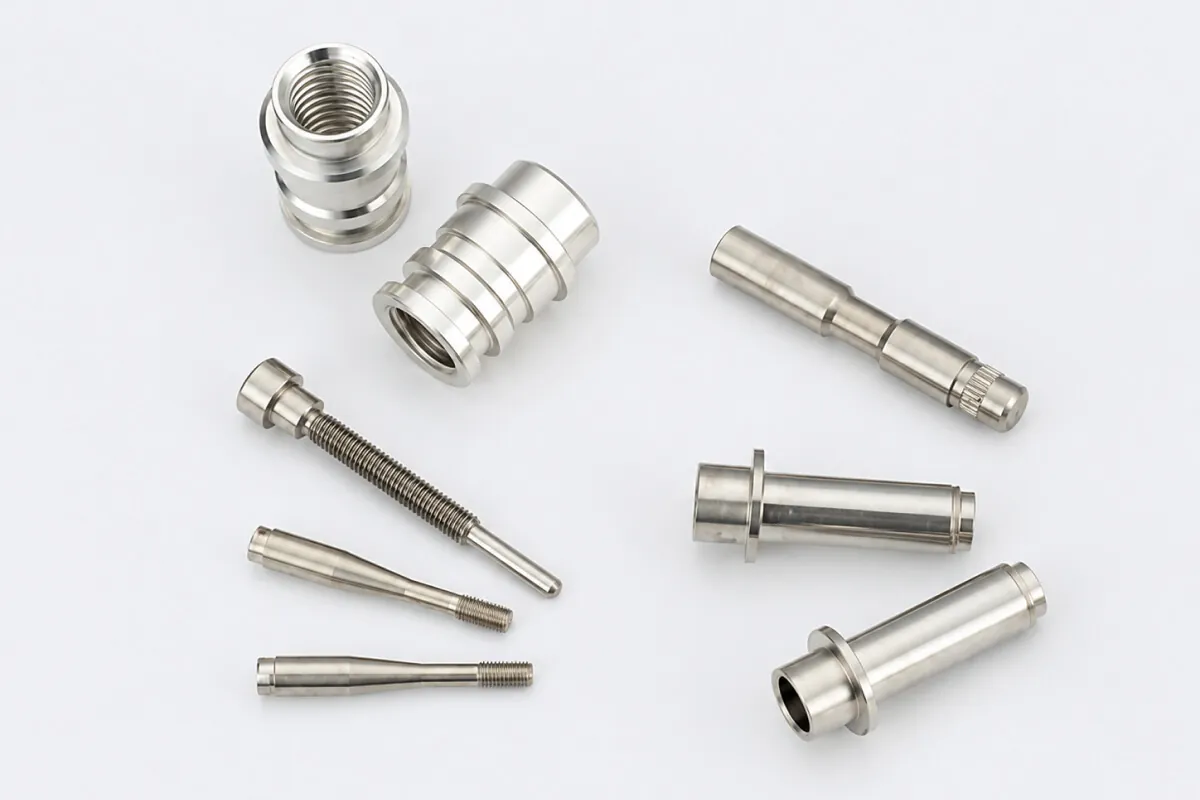
CNC turn-mill machining lets a single fastener carry features that would otherwise need several operations or several separate parts. Cheng Hao machines special bolts, shoulder screws, drilled bolts, and fine-thread screws to a supplied drawing, and controls the material through the process so a production run stays consistent from batch to batch.
Shoulder and stepped screws
Shoulder screws give a precision-ground, unthreaded shoulder that acts as a bearing or pivot surface, with a smaller thread below it to clamp. The geometry is defined internationally by ISO 7379, which covers hexagon socket head shoulder screws in nominal shoulder diameters from 6.5 mm up to and including 25 mm. Machining to print means the shoulder diameter and length sit where the design needs them, rather than being rounded to the nearest stocked size.
Special threads and drilled bolts
Fine and non-standard threads solve problems that coarse threads create in fine-adjustment and thin-wall applications. Metric thread form follows the general plan set out in ISO 261, and machining allows pitches and lengths that fall outside a standard die set. Cross-holes for lock wire, through-drilled shanks, and other internal features can be added in the same setup, which keeps concentricity between them under control.
Materials and finishes
We machine carbon steel in low, medium, and high grades, stainless in SUS302, 304, 316, and 410, alloy steel, aluminum grades including 6061 and 7075, and brass or bronze. Finishes span zinc, black oxide, nickel plating, anodizing, and Ruspert silver, chosen for the corrosion and wear the part will meet in service. Where corrosion resistance has to go further than standard stainless, our NSSC550 grade, exclusive to Cheng Hao, is an option worth raising at the quotation stage.
Machined or cold-formed: which route fits the part?
The choice between machining and cold forming comes down to geometry and volume, not quality. A standard M6 cap screw in the hundreds of thousands belongs on a former, while a stepped, cross-drilled, tight-tolerance part in the low thousands usually belongs on a CNC machine. The table below sets out where each method fits.
| Factor | Cold forming | CNC machining |
|---|---|---|
| Geometry | Standard and lightly modified profiles | Complex, stepped, cross-drilled, made to print |
| Tolerances | General fastener tolerances | Tighter tolerances, ground-surface features |
| Threads | Standard die pitches | Non-standard pitches and lengths |
| Tooling | Dedicated die per profile | No dedicated die needed |
| Best volume | Very high | Low to medium production runs |
| Custom lead time | Depends on die availability | Typically 30 to 75 days |
Neither route replaces the other. A well-planned program often uses both, cold forming the standard lines and machining the parts that carry the awkward geometry. Keeping those under one roof is part of why the two capabilities sit together at Cheng Hao. You can see the standard side of that range on our custom machine screws page.
Why source volume custom fasteners from a fastener factory?
Sourcing custom CNC fasteners from a fastener manufacturer, rather than a general machine shop, keeps the part with a supplier that treats it as a fastener first. Cheng Hao runs custom fasteners as production work, not one-off prototyping, so the focus is on batch consistency and repeatable supply rather than a single showpiece sample. That suits buyers placing recurring orders more than it suits someone who wants ten pieces once.
Quality and certification
Our quality management system is certified to ISO 9001, and some products also carry CE marking. Each delivery includes an inspection certificate, and for a new custom part we produce a small batch of samples for your approval before full production begins. As a direct machine screw supplier and manufacturer, we control that chain ourselves rather than passing it to a subcontractor.
What we need to quote
A quotation starts from a drawing. Send a CAD or STEP file, or a fully dimensioned diagram, with the material, thread, head and driver type, any surface finish, and the quantity you expect to run. Because complexity, machining time, and material vary so widely from part to part, we assess the minimum order quantity for each one rather than applying a single figure. For volume programs, it’s worth asking about pairing machined and cold-formed lines under one supply arrangement.
FAQ
What is the minimum order quantity for custom CNC fasteners?
There is no single figure. Minimum order quantity depends on the part’s complexity, machining time, and material, so Cheng Hao quotes it per drawing once we have seen the design and the quantity you expect to run.
What files do you need to quote a custom part?
A CAD or STEP file is ideal. A fully dimensioned drawing or diagram also works, provided it states material, thread, head and driver type, finish, and expected quantity.
How long does a custom CNC fastener order take?
Custom parts typically ship in 30 to 75 days. The exact time depends on quantity, material availability, and finishing, and it is confirmed at the quotation stage.
Can you machine shoulder screws to a specific shoulder diameter and length?
Yes. Machining to print means the shoulder diameter, shoulder length, and thread are set to the drawing rather than the nearest stocked size, within the general form described by ISO 7379.
Which materials can you machine?
Carbon steel, stainless steel including SUS304, SUS316, and the NSSC550 grade exclusive to Cheng Hao, alloy steel, aluminum grades such as 6061 and 7075, and brass or bronze.
Do you supply both machined and cold-formed fasteners?
Yes. Cheng Hao is a fastener manufacturer with both cold forming and CNC machining in-house, so a program can combine standard cold-formed lines with machined custom parts under one supplier.
