
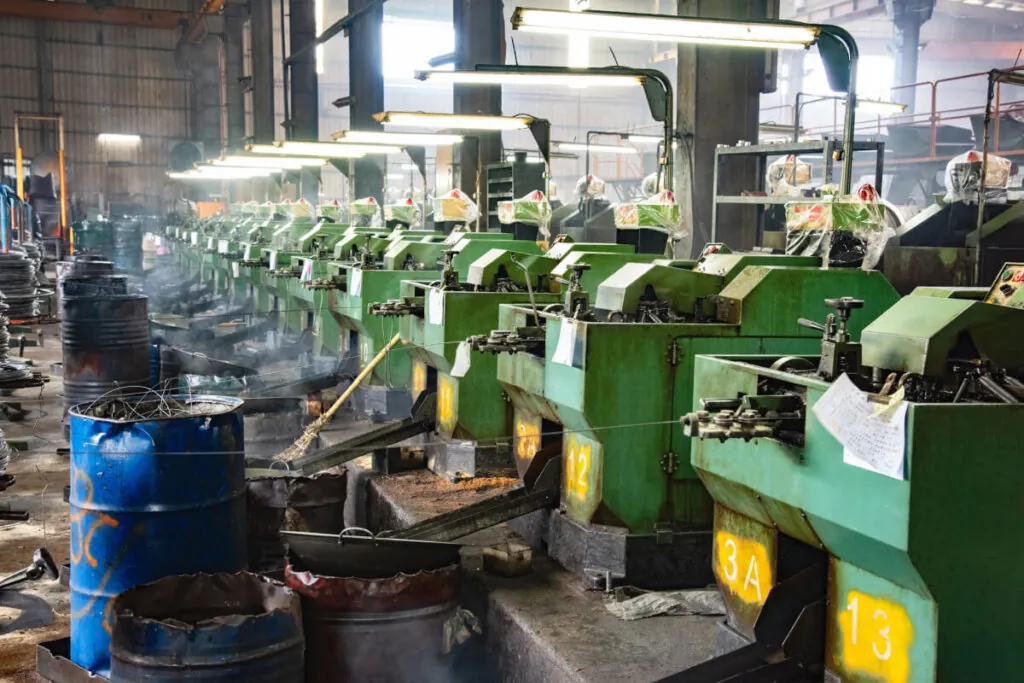
Cold Forming

Cold forming screw machines in a factory in Asia of a screw manufacturer

Definition of Cold Forming

Cold forming is a metal forming process where screw blanks are shaped at room temperature by applying high pressure through dies. It forces metal flow without heating, producing precise threads and profiles with enhanced surface finish. This process reduces material waste, increases dimensional accuracy, and improves mechanical properties through work hardening. Cold forming optimizes production speed and cost efficiency by eliminating secondary machining operations and enabling high-volume output. The absence of heat minimizes grain growth, resulting in a tougher microstructure ideal for load-bearing fasteners. Engineers and buyers rely on cold formed screws for consistent quality, tight tolerances, and superior strength in assemblies ranging from electronics to automotive applications.

Why It Matters for Screws and Fasteners

When you select fasteners manufactured by cold forming, you benefit from enhanced fatigue resistance and uniform material properties. This consistency reduces failures in high-stress applications. You also achieve cost savings because cold forming uses less raw material and speeds up production by cutting out machining steps.In industries like automotive and electronics, you need screws that meet tight tolerances. Cold forming provides repeatable dimensions, ensuring parts fit precisely. This process also improves thread integrity, so your assemblies withstand vibration and load without loosening.

FAQ

Which materials are suitable for cold forming?

Common materials include low-carbon and medium-carbon steels, stainless steels, and some aluminum alloys. These metals have enough ductility to flow under pressure without cracking. Engineers choose materials based on strength requirements, corrosion resistance, and compatibility with the cold forming dies.

What are the main advantages of cold formed screws?

Cold formed screws deliver consistent thread geometry, high fatigue resistance, and improved mechanical properties thanks to work hardening. You also lower costs by minimizing machining steps and material scrap. The process suits mass production, offering rapid cycle times and uniform quality.

Can cold forming affect screw performance under load?

Yes. Cold forming enhances tensile strength and fatigue life by refining grain structure and inducing compressive stresses on the surface. This makes cold formed screws more resistant to shear and pull-out forces, ensuring reliable performance in critical assemblies.

inquire now