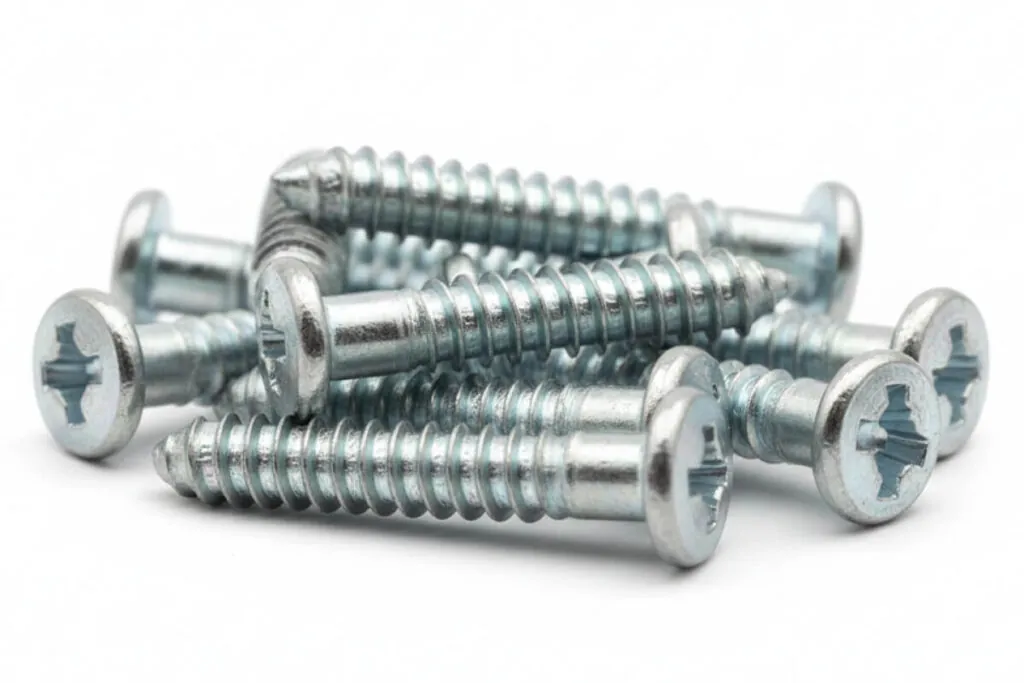
Zinc Plated Steel Screws

This image shows a group of zinc plated steel screws on a white background - Taiwan Screw

Definition of Zinc Plated Steel Screws

Zinc plated steel screws are carbon steel fasteners coated with a thin layer of zinc through electroplating to provide corrosion protection. The zinc coating typically ranges from 5 to 25 microns thick and acts as a sacrificial barrier that corrodes preferentially to the underlying steel substrate. These screws are manufactured by immersing finished carbon steel fasteners in an electrolytic zinc bath, creating a uniform metallic coating that adheres to the screw surface.

Zinc plating can be clear, yellow, or black depending on the chromate conversion coating applied after plating. Clear zinc provides basic rust resistance, yellow zinc offers enhanced protection, and black zinc delivers improved appearance with moderate corrosion resistance. Zinc plated steel screws are widely used in indoor construction, furniture assembly, automotive components, electrical enclosures, and general manufacturing where moderate corrosion protection is sufficient and cost control is important.

Why It Matters for Screws and Fasteners

When you choose zinc plated steel screws, you gain affordable corrosion protection for applications that do not require stainless steel performance levels. The zinc coating extends fastener life in typical indoor environments and provides adequate protection for many outdoor applications in non-marine climates. This cost-effective solution allows you to meet corrosion requirements without the material expense of stainless steel or the weight penalty of hot-dip galvanizing.

The plating process also improves the screw's appearance and provides lubricity that reduces installation torque and galling. The smooth zinc surface allows nuts and threaded components to turn more easily, reducing wear on power tools and minimizing thread damage during assembly. However, you must account for the coating thickness in critical tolerance applications, as the zinc layer adds approximately 5-25 microns to all dimensions including thread fit.

Taiwan manufacturers control zinc plating thickness and quality through rigorous testing including salt spray exposure, adhesion tests, and thickness measurements. Clear zinc typically provides 96-200 hours of salt spray resistance depending on thickness, while yellow zinc chromate can extend this to 300-500 hours. Understanding these performance thresholds helps you select the appropriate plating specification for your application environment without over-specifying expensive alternatives.

FAQ

How long do zinc plated steel screws last in outdoor environments?

Zinc plated steel screws typically last 2-5 years outdoors in moderate climates with occasional rain exposure. Performance decreases significantly in coastal areas, high humidity regions, or environments with chemical exposure. Salt spray accelerates zinc consumption and can cause visible rust within months near marine environments.
For outdoor applications exceeding 5 years or in harsh conditions, specify hot-dip galvanized fasteners, stainless steel, or zinc-nickel alloy coatings instead. Always conduct environmental assessment before selecting zinc plating for exterior use.

Can zinc plated screws be welded or soldered?

Zinc plating interferes with welding and soldering processes because zinc vaporizes at relatively low temperatures, creating hazardous fumes and porosity in weld joints. Remove zinc coating in weld zones through grinding or chemical stripping before welding. For applications requiring welding, use uncoated carbon steel screws or specify weldable fasteners.
Zinc fumes released during heating can cause metal fume fever, so proper ventilation and respiratory protection are mandatory if you must heat zinc plated components.

What is the difference between clear zinc and yellow zinc plating?

Clear zinc plating provides a bright, silvery appearance with basic corrosion protection suitable for indoor use and light outdoor exposure. Yellow zinc includes a chromate conversion coating that improves corrosion resistance by 2-3 times compared to clear zinc, making it better for outdoor applications.
Black zinc combines zinc plating with black chromate for appearance and moderate corrosion protection. Yellow zinc traditionally contained hexavalent chromium, but modern trivalent chromate versions meet RoHS compliance while maintaining good corrosion performance.

inquire now