
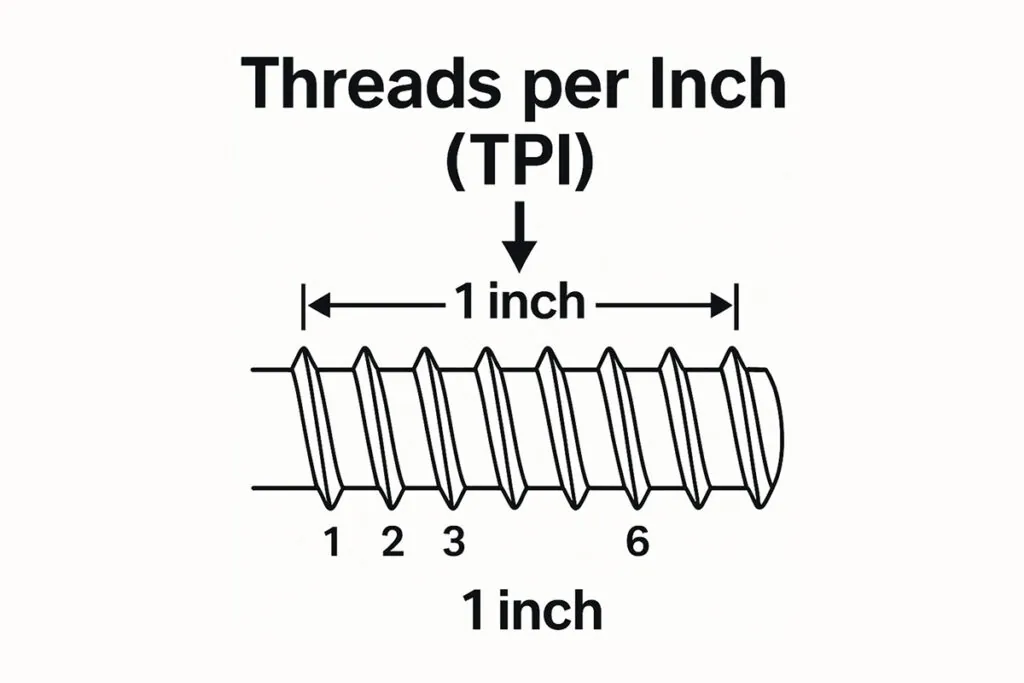
Threads Per Inch (TPI)

Diagram showing the definition of threads per inch (TPI) - Taiwan Screw Manufacturer

Definition of Threads Per Inch (TPI)

Threads Per Inch (TPI) is the count of thread crests within one inch of a fastener’s length in imperial systems. You use TPI to describe how coarse or fine a screw thread is. Lower TPI indicates coarse threads with fewer turns per inch, speeding assembly but reducing shear strength. Higher TPI indicates fine threads with more turns per inch, increasing clamp load and vibration resistance at the expense of longer installation times. Engineers and buyers rely on TPI to match fasteners to load requirements, torque tools, and mating components in mechanical and structural applications.

Why It Matters for Screws and Fasteners

Choosing the correct TPI ensures you achieve the clamp load you designed without overtorquing. If the TPI is too low, threads may strip under heavy loads. If it is too high, you risk galling, and installation takes longer.For procurement and production, specifying TPI clearly prevents mismatches with taps, dies, and mating parts. Clear specs cut scrap rates, eliminate rework, and keep your projects on schedule.

FAQ

How do I measure TPI on a screw?

Use an imperial thread pitch gauge that matches the screw’s thread profile. Lay the gauge teeth into the threads and read the number of threads per inch marked on the gauge.

What is the difference between TPI and metric pitch?

TPI counts the number of threads in one inch. Metric pitch measures the distance in millimetres between adjacent threads. They are inversely related but use different units.

How can I convert metric pitch to TPI?

Divide 25.4 mm by the metric pitch (in mm) to get TPI. For example, a 1.25 mm pitch equals about 20 TPI (25.4 ÷ 1.25 ≈ 20.3), then round to the nearest standard value.

inquire now