
Thread Pitch

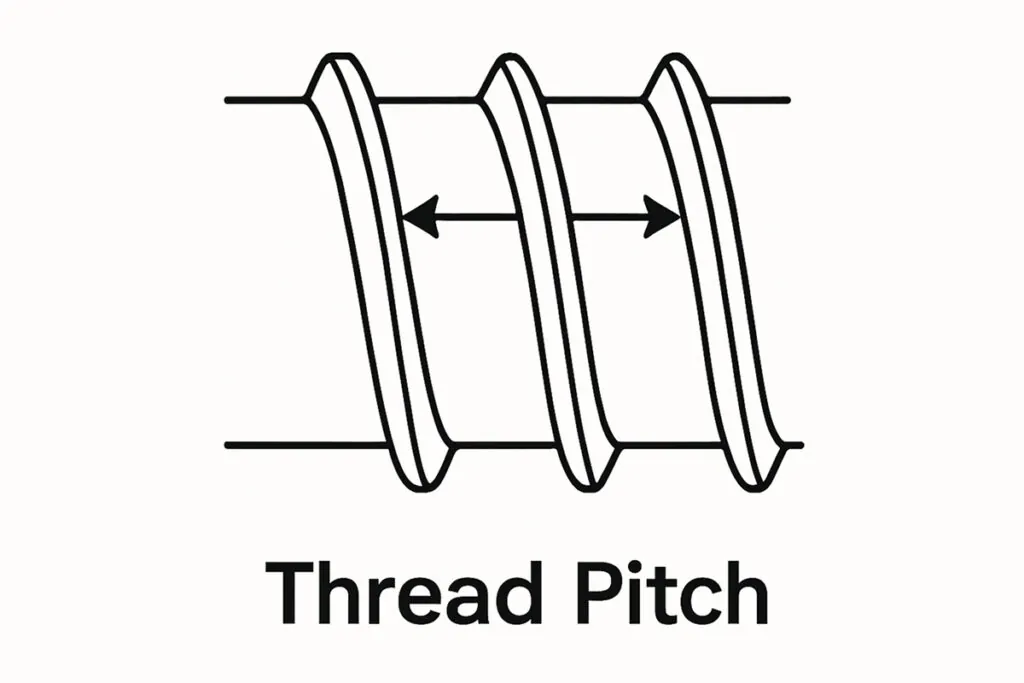
Diagram showing the definition of thread pitch - Taiwan Screw Manufacturer

Definition of Thread Pitch

Thread pitch is the distance between adjacent thread peaks measured parallel to a fastener’s axis. It tells you how tightly the threads are spaced on screws, bolts, and studs. You select pitch to balance load capacity, assembly speed, and resistance to vibration. A coarse pitch has fewer threads per inch or millimeter, making assembly faster but offering less shear strength. A fine pitch has more threads per unit length, increasing clamp load and vibration resistance but slowing installation. Understanding thread pitch helps you choose the right fastener for strength, durability, and ease of service in mechanical and structural applications.

Why It Matters for Screws and Fasteners

Choosing the right thread pitch ensures you reach the required clamp load without overtorquing. If you pick a pitch that’s too fine, installation takes longer and you risk galling under high friction. If you pick one that’s too coarse, you may not achieve sufficient preload or vibration resistance.For engineers, thread pitch affects joint stiffness and load distribution. You can optimize joint design by matching pitch to material hardness and expected loads. For procurement, specifying the correct pitch prevents mismatches with mating components and cuts down on costly rework.

FAQ

How do you measure thread pitch?

Use a thread pitch gauge or calipers. Align the gauge’s teeth with the thread profile to read pitch in threads per inch or thread-to-thread distance in millimeters.

What is the difference between thread pitch and lead?

Pitch is the distance between adjacent threads. Lead is the linear travel of the nut in one full revolution. For single-start threads, pitch equals lead.

Can thread pitch affect load capacity?

Yes. Fine pitch distributes load over more threads, increasing shear strength. Coarse pitch spreads load over fewer threads, which can reduce maximum capacity.

inquire now