
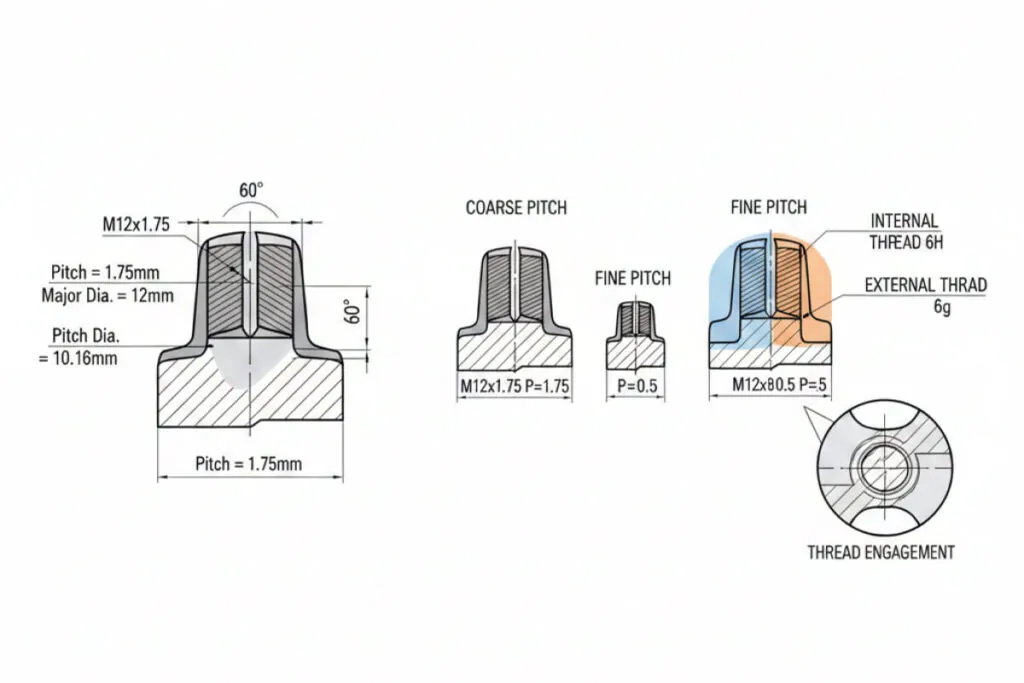
Thread pitch selection in precision fasteners ISO metric threads significantly influences joint performance under vibrational loading. Fine pitch threads (such as M12x1.25 versus the standard M12x1.75) provide increased thread engagement area per unit length, distributing loads across more thread flanks and reducing stress concentrations. This configuration enhances fatigue resistance in applications experiencing cyclic loading. When sourcing from manufacturers like Cheng Hao, specifying fine pitch ISO metric threads for critical vibration-prone assemblies in HVAC equipment or automotive components ensures superior thread retention. The reduced helix angle of fine pitch threads also increases the resistance to self-loosening, though proper torque specifications and supplementary locking methods remain essential for maintaining preload in demanding service conditions.
Tolerance class selection for precision fasteners ISO metric threads depends on the intended assembly method and required fit characteristics. The 6g/6H combination represents the most common tolerance class, providing a medium fit suitable for general industrial applications with conventional fastening tools. For automated assembly operations or applications requiring consistent torque-to-preload relationships, the tighter 5g6g/5H6H tolerance ensures minimal play and improved repeatability. Cheng Hao recommends 4h6h/4H5H tolerance classes for precision instruments where minimal radial clearance is critical, though these specifications require careful surface finish control and increase manufacturing costs. Conversely, 8g/7H tolerance classes accommodate plated or coated fasteners where additional clearance prevents thread interference while maintaining adequate engagement strength for non-critical structural applications.
Material hardness and ductility determine the optimal thread engagement length for precision fasteners ISO metric threads. When fastening into lower-strength materials like aluminum or brass, the thread engagement length must increase to compensate for reduced shear strength of the internal thread material. Engineering standards typically specify engagement lengths of 1.5 to 2 times the nominal diameter for steel-to-steel connections, but this increases to 2.5 to 3 times diameter when threading into softer alloys. The ISO metric thread geometry allows predictable calculation of the load distribution across engaged threads, with approximately 70% of the total load carried by the first three threads. Understanding these relationships enables proper specification of tapped hole depth and prevents thread stripping failures in service, particularly important for assemblies combining dissimilar materials in electronics enclosures or HVAC component mounting applications.

| Service | Cookies | Description |
|---|---|---|
| Google Analytics | _gat_gtag, _ga, _gid | Used to distinguish users and sessions for web statistics purposes. |
| Service | Cookies | Description | |
|---|---|---|---|
| Google Analytics | _gat_gtag, _ga, _gid | Used to distinguish users and sessions for web statistics purposes. |