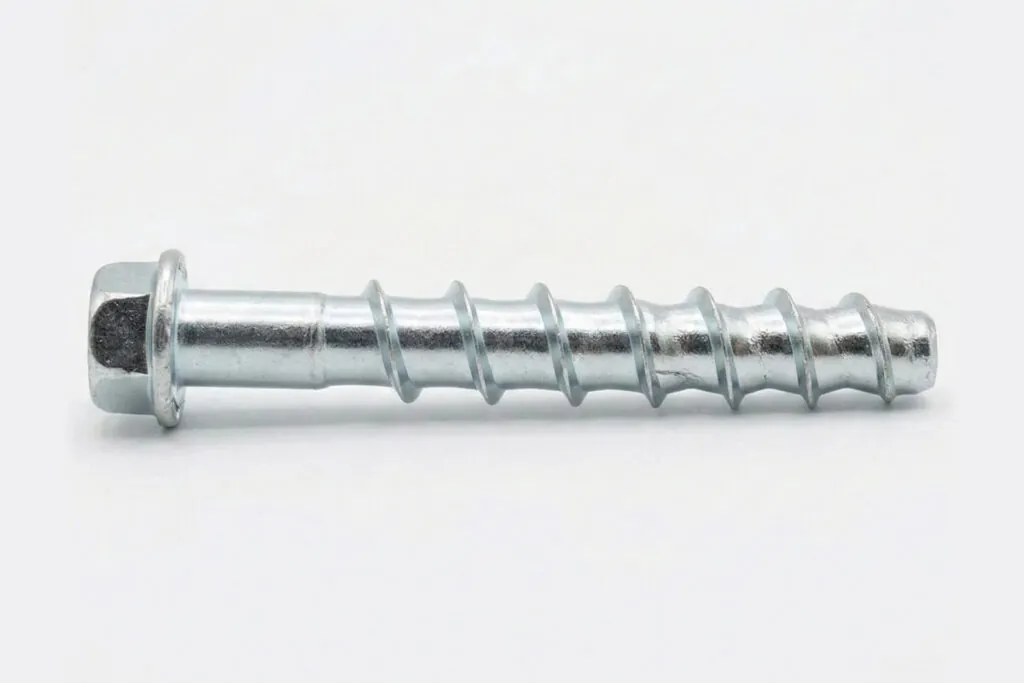
Structural Grade Screws

This image shows structural grade screws on a white background

Definition of Structural Grade Screws

Structural grade screws are construction fasteners that meet defined minimum mechanical property thresholds for use in load-bearing and shear-transferring assemblies. Unlike standard fasteners, structural grade screws are manufactured to documented tensile strength, shear strength, and proof load values published in an ICC-ES evaluation report or a comparable third-party approval.

These construction fasteners are used in wood-to-wood, wood-to-metal, and metal-to-metal connections where building codes require demonstrated structural performance data. Applications include timber frame connections, shear wall sheathing, ledger attachments, and hold-down hardware installations in residential and light commercial construction projects.

Why It Matters for Screws and Fasteners

Mechanical Property Requirements and Code Compliance
Structural grade screws used as construction fasteners must meet published tensile, shear, and withdrawal resistance values verified through independent laboratory testing. ICC-ES evaluation service reports, such as those issued under AC233, document allowable design loads per screw for specific wood species, connection configurations, and load directions. Without a current evaluation report, structural grade screws cannot be code-compliantly specified in jurisdictions that adopt the International Building Code or International Residential Code.

Heat Treatment and Material Grade
Achieving structural grade screw performance as construction fasteners requires consistent case hardening depth and core ductility. Through-hardened screws with insufficient ductility may fail in a brittle mode under dynamic or impact loading, which is unacceptable in seismic or wind-load applications. Alloy steel grades with controlled carbon content and boron additions provide the combination of high surface hardness for thread formation and adequate core toughness for structural service.

Coating and Corrosion Class
Structural grade screws installed in preservative-treated lumber must carry appropriate corrosion resistance ratings. ACQ and CA lumber treatments create a corrosive environment that rapidly degrades standard zinc coatings. Hot-dip galvanized coatings to ASTM A153 or 316 stainless steel are required by code for contact with treated lumber in many applications. The structural grade designation applies only when both the mechanical and corrosion specifications of the fastener are met simultaneously.

FAQ

What documentation should be requested when sourcing structural grade screws for construction fasteners applications that require code compliance?

When sourcing structural grade screws for code-compliant construction fasteners applications, request the current ICC-ES evaluation report number and publication date confirming allowable design values for the specific connection configurations required. The report should list tensile strength, shear strength, withdrawal resistance per species group, and any installation requirements such as pre-drilling or edge distance minimums. Cheng Hao maintains test documentation supporting structural grade screw performance and can provide certified material test reports confirming tensile strength and hardness values for each production lot, enabling quality verification at the point of receipt.

How do structural grade screws differ from standard construction fasteners in terms of shear resistance in wood-to-wood connections?

Structural grade screws provide documented shear resistance values derived from testing per ASTM D1761 or equivalent protocols in specific wood species and connection geometries. Standard construction fasteners lack published shear design values and cannot be used in code-compliant lateral load path designs. The shear resistance of structural grade screws depends on screw diameter, bending yield strength, embedment depth in the main member, and the combined bearing capacity of both connected members. Designers select screw size and spacing based on the design shear demand divided by the allowable single-fastener shear value from the ICC-ES report, applying appropriate load duration and wet service adjustment factors.

What installation requirements affect the allowable load values published for structural grade screws in construction fasteners specifications?

Allowable load values for structural grade screws as construction fasteners are based on specific installation conditions defined in the ICC-ES evaluation report. Critical parameters include minimum end and edge distances, minimum spacing between adjacent fasteners, and whether pre-drilling is required for dense or dry lumber. Deviating from these parameters reduces allowable loads and may void the evaluation report's applicability. Fastener orientation relative to grain direction also affects withdrawal resistance values. Contractors and inspectors should verify that installation patterns shown in shop drawings match the reference conditions in the evaluation report before approving structural grade screw connections for structural construction fasteners applications.

inquire now