
Hot Forging

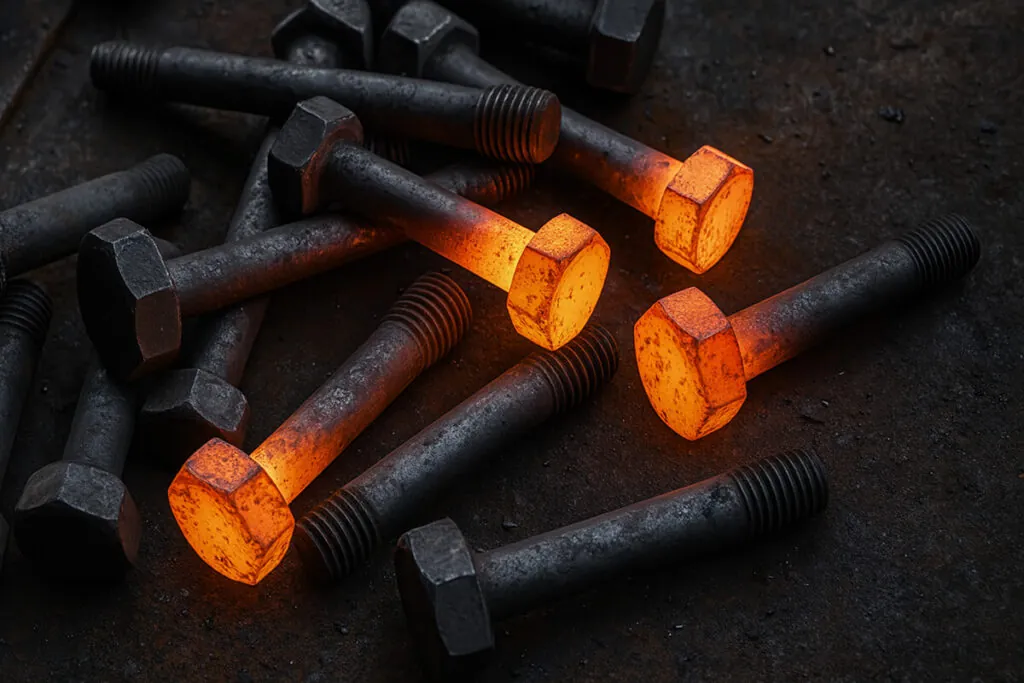
Hot Forging a closeup image of hot forged bolts that have just been manufactured

Definition of Hot Forging

Hot forging is a metal forming process in which screws and fastener blanks are heated above their recrystallization temperature and then shaped by compressive forces. You heat the workpiece to 950–1250 °C to increase its ductility, then press it into a die that creates the desired geometry. This method improves grain structure, reduces porosity and yields parts with high strength and fatigue resistance. Engineers and buyers choose hot forging for large-volume runs or parts with complex shapes, because it delivers consistent mechanical properties and tight dimensional control. In screw and fastener manufacturing, hot forging ensures robust performance in demanding applications such as automotive assemblies and heavy machinery.

Why It Matters for Screws and Fasteners

When you specify hot forged screws, you get higher tensile strength and better fatigue life compared with cut or cold-formed parts. That means fewer failures in high-stress joints and extended maintenance intervals for your equipment.Hot forging also delivers tighter tolerances and cleaner grain flow. You can achieve complex head shapes or integrated features without secondary machining, cutting overall production time and cost.In large production runs, hot forging reduces material waste. You shape near-net-size parts that require minimal finishing. That helps you manage scrap and control unit costs.

FAQ

Which materials are best suited for hot forging?

Alloy steels, carbon steels and certain stainless steels respond well to hot forging. You pick grades that tolerate high temperatures without cracking and that develop fine grain flow. Always consult material data sheets to ensure the chosen alloy meets your strength and durability needs.

How does hot forging affect lead times?

Hot forging can speed up production on large batches because parts come out near net shape. You still need cooling and perhaps heat treatment, but you avoid extensive machining. Work with your supplier to align furnace schedules and die availability for the shortest turnaround.

Are hot forged screws more expensive than cold forged?

Unit cost for hot forged screws often runs higher because of energy and tooling costs. However, reduced scrap, fewer secondary operations and better mechanical performance can lower your total installed cost. Always compare full production and life-cycle expenses, not just per-part price.

inquire now