
Thread Engagement

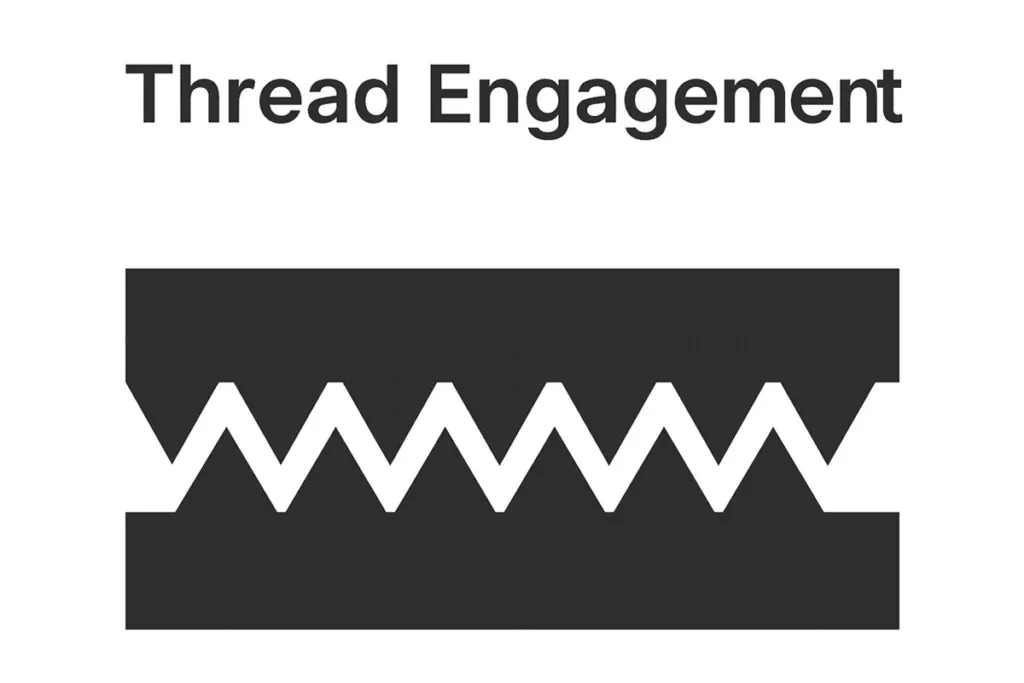
Diagram showing the definition of thread enagagement - Taiwan Screw Manufacturer

Definition of Thread Engagement

Thread engagement is the portion of a screw’s threaded length that fully mates with internal threads in a tapped hole or nut. It is measured in thread turns or linear length and determines the shear area available to resist axial and torsional loads. Material properties such as hardness and tensile strength affect the engagement required. Standard guidelines recommend a minimum engagement equal to the fastener’s nominal diameter for steel joints, with greater depths for softer materials. Specifying the correct engagement length ensures reliable joints in machinery, structural connections, and fluid seals, and prevents stripping, downtime, and warranty claims.

Why It Matters for Screws and Fasteners

Proper thread engagement ensures you achieve the clamp load and shear strength designed for your joint. If you under-engage, threads may strip under tension or torque, causing leaks or mechanical failure. Over-engagement adds unnecessary depth, increases production cost, and complicates maintenance.From procurement to production, clear engagement specs guide tap drill depth, tooling selection, and inspection criteria. You reduce scrap rates, avoid rework, and protect your reputation by delivering assemblies that meet strength and safety requirements.

FAQ

How do you calculate required engagement length?

Multiply the bolt’s nominal diameter by a factor (typically 1× for steel, up to 1.5× for aluminum). Consult material guidelines and apply safety factors for dynamic loads.

What is the minimum engagement for steel fasteners?

Industry practice calls for engagement equal to at least 100% of the bolt’s nominal diameter in steel-to-steel joints to ensure adequate shear strength.

How does material hardness affect engagement depth?

Softer materials need deeper engagement—often 1.5× to 2× the bolt diameter—to achieve the same shear strength that steel provides at 1× diameter.

inquire now