
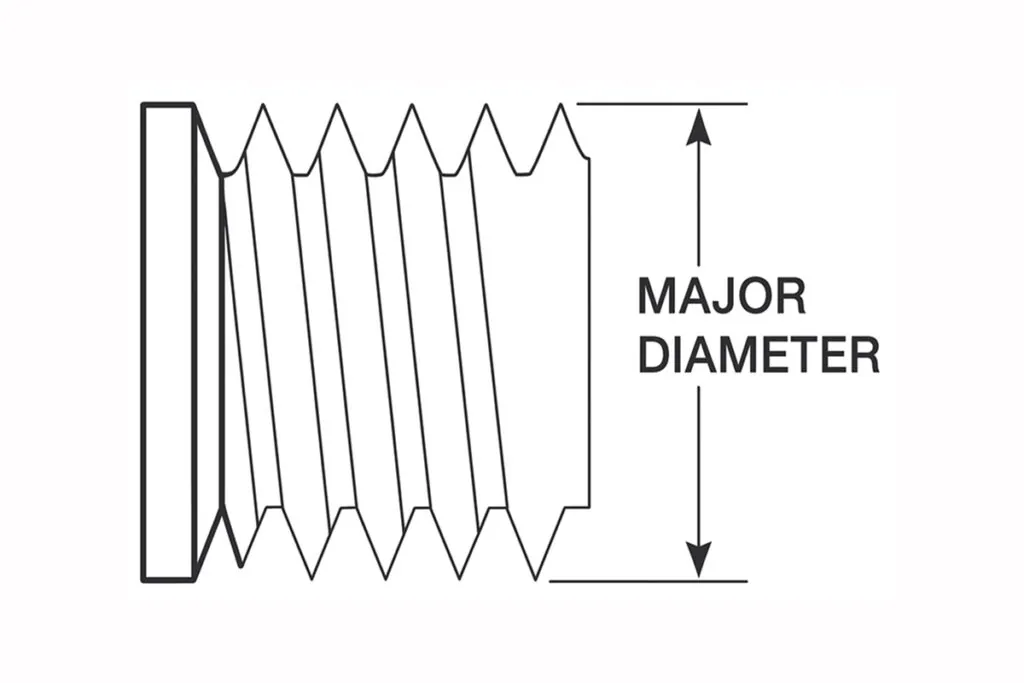
Thread Diameter

Diagram showing the definition of thread diameter- Taiwan Screw Manufacturer

Definition of Thread Diameter

Thread diameter is the major or nominal diameter of a threaded fastener measured across the tips of its external threads or the roots of internal threads. It defines the fastener’s size and fit in mating holes and nuts. You use thread diameter to select drill sizes, nuts, and clearance holes. It also factors into strength and torque calculations, since shear area and engagement length depend on the diameter. Accurate control of thread diameter ensures proper assembly, avoids interference, and prevents joint failure. Engineers and buyers rely on standardized diameter tables, such as ISO Metric and Unified threads, to specify compatible components and maintain interchangeability in manufacturing and maintenance.

Why It Matters for Screws and Fasteners

When you specify the correct thread diameter, you ensure the bolt seats properly in the hole. Proper fit prevents wobble, reduces wear, and maintains clamp load under dynamic loads. If you choose a diameter that’s too large, you risk binding; too small invites play and fatigue.For manufacturing, clear diameter specs reduce drill misalignment, scrap rates, and rework. You keep tap and die inventories streamlined when you stick to standard sizes. Accurate thread diameters also ease quality checks with gauges, helping you deliver reliable assemblies on time.

FAQ

What is the difference between major and minor thread diameter?

Major diameter is the outermost measurement across external thread peaks. Minor diameter is the innermost measurement across the roots of internal threads. Both define mating clearances and strength.

Why is thread diameter critical in fastener selection?

Thread diameter dictates fit and engagement. It affects hole clearances, shear area, and clamp load capacity. The wrong diameter can cause binding, stripping, or joint failure.

How do standards define thread diameter?

ISO and ASME standards list nominal thread diameters and tolerance classes for each series. For example, ISO Metric uses “M” plus diameter in millimetres, while Unified threads use inch-based series.

inquire now