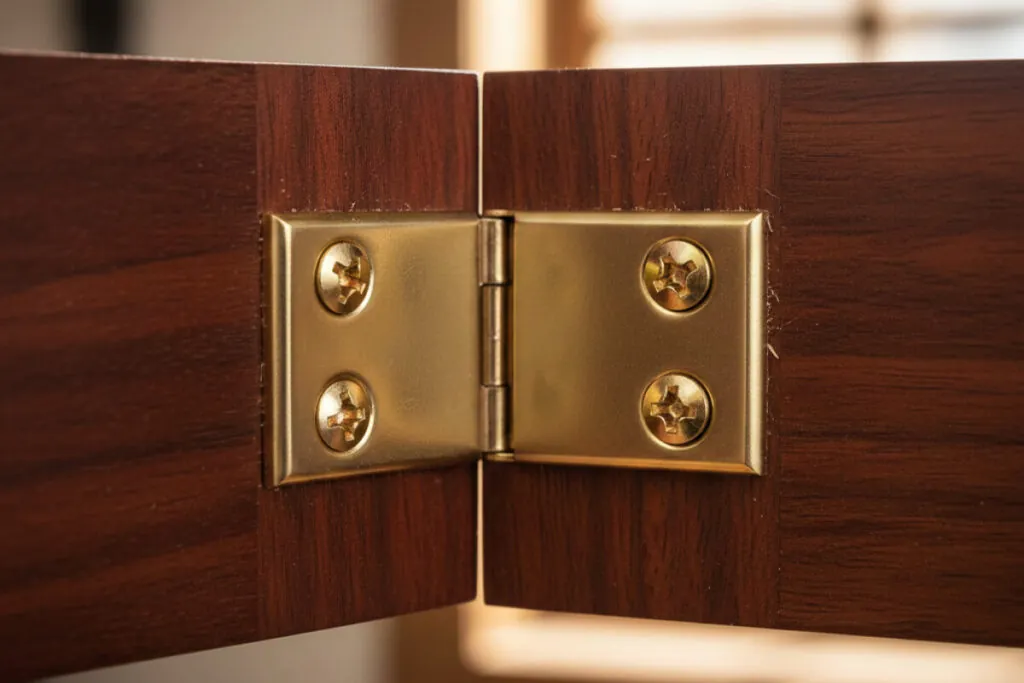
Countersunk Wood Screws

This image shows countersunk wood screews installed int he hinge of a cabinet

Definition of Countersunk Wood Screws

Countersunk wood screws are fasteners featuring conical or flat tapered heads designed to sit flush with or slightly below wood surface levels, creating smooth finished appearances in carpentry and woodworking applications. Taiwan screw manufacturers countersunk wood screws typically incorporate 82-degree flat head angles matching standard drill bit geometry, allowing the head to draw into wood fibers as the screw tightens and self-countersinking without pre-drilling in softwoods.

These screws employ coarse thread patterns optimized for wood grain engagement, sharp points for easy starting, and various drive systems including Phillips, square, star, or combo drives. The countersunk design eliminates protruding fastener heads that interfere with finish surfaces, cabinet doors, or trim work, while distributing clamping forces across the conical bearing surface. Available in carbon steel, stainless steel, and brass materials with lengths from 1/2 inch to 6 inches, countersunk wood screws serve applications from furniture assembly to deck construction wherever flush installation is required.

Why It Matters for Screws and Fasteners

Countersunk head geometry serves both functional and aesthetic purposes in woodworking. The tapered head draws flush as the screw tightens, eliminating surface protrusions that would catch on clothing, interfere with moving parts, or disrupt smooth finishes. This self-countersinking action in softwoods saves installation time by eliminating separate countersinking operations, though hardwoods still benefit from pilot holes and countersinks to prevent splitting.

The 82-degree head angle represents standardization across industries, matching countersink drill bits and hole preparation tools. Taiwan screw manufacturers countersunk wood screws achieve proper seating only when this angle matches the prepared hole geometry. Variations like 100-degree flat heads or oval heads serve specialized applications where different bearing surface requirements exist. Thread design under the head must transition smoothly to prevent stress concentrations that cause head breakage during installation.

Material selection affects both strength and corrosion resistance. Carbon steel screws provide maximum strength for structural applications but require protective coatings for outdoor use. Stainless steel offers corrosion resistance with reduced shear strength, acceptable for non-structural applications. Brass screws prevent galvanic corrosion in marine applications but possess limited load capacity, requiring larger sizes for equivalent holding power compared to steel fasteners.

FAQ

What head style screws sit flush with wood surfaces?

Countersunk head screws, specifically flat head screws with 82-degree tapered heads, sit perfectly flush with wood surfaces when properly installed. Taiwan screw manufacturers countersunk wood screws feature this standard 82-degree angle that matches common countersink drill bits, allowing the tapered head to draw even with the wood surface as the screw tightens. For softwoods like pine and cedar, these screws self-countersink during installation without pre-drilling. Hardwoods such as oak, maple, or walnut require pilot holes drilled with combination countersink-drill bits to prevent splitting while achieving flush installation. When sourcing from manufacturers like Cheng Hao, specify flat head or "countersunk head" design rather than pan, round, or hex heads which intentionally protrude above surfaces. For applications requiring heads slightly below the surface for putty or plug coverage, oval head or deep countersink screws provide recessed installation.

Do countersunk wood screws require pre-drilling or countersinking in different wood types?

Pre-drilling and countersinking requirements for taiwan screw manufacturers countersunk wood screws depend on wood species hardness and screw diameter. Softwoods (pine, cedar, fir) under 600 Janka hardness accept #6 to #8 diameter countersunk screws without pre-drilling, as the tapered head naturally draws flush while the sharp point penetrates easily. Medium hardwoods (cherry, walnut) at 800-1200 Janka require pilot holes sized 70-80% of screw shank diameter but may self-countersink. Dense hardwoods (oak, maple, hickory) exceeding 1200 Janka demand both pilot holes and separate countersinking operations using combination drill-countersink bits to prevent splitting and achieve proper head seating. Cheng Hao recommends pre-drilling for screws larger than #10 in any wood species and always pre-drilling within 3 inches of board ends where splitting risk is highest.

How does the 82-degree head angle affect countersunk screw installation and performance?

The 82-degree head angle on taiwan screw manufacturers countersunk wood screws represents industry standardization for flush installation, matching the angle of standard countersink drill bits and router bits used in hole preparation. This angle provides optimal balance between head bearing surface area for load distribution and taper geometry for smooth wood surface integration. Steeper angles like 100 degrees create larger bearing surfaces but require more material removal and may not seat fully in standard countersinks. Shallower angles reduce bearing area, concentrating stresses and increasing splitting risk. The 82-degree specification ensures that screws from different manufacturers achieve consistent installation depth and appearance when used with standard tooling. Proper seating occurs when the entire conical head surface contacts the countersink, distributing clamping forces evenly to prevent wood crushing while pulling boards tightly together.

inquire now