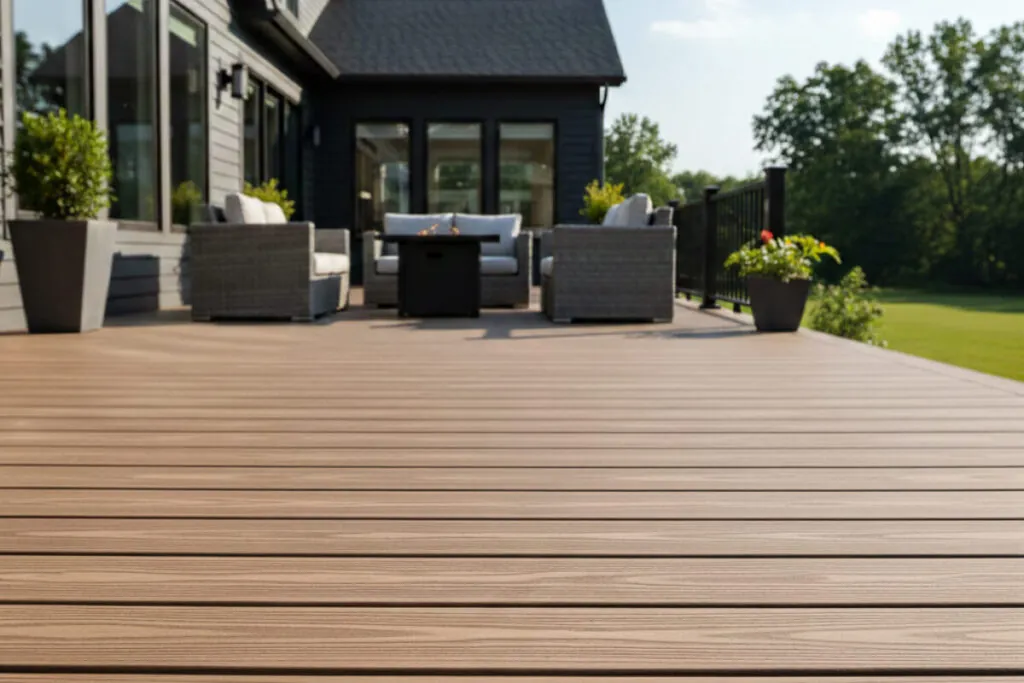
For outdoor deck construction, specify construction fasteners deck board screws with Type 17 points, #8 or #10 diameter, and lengths matching your decking thickness plus 1.5 inches minimum joist penetration. For pressure-treated lumber, coated steel screws with ceramic-epoxy or proprietary polymer coatings provide excellent corrosion resistance at reasonable cost. When sourcing from manufacturers like Cheng Hao, request screws meeting ASTM F1941 performance standards for exterior wood applications. For premium installations or coastal environments, upgrade to 305 or 316 stainless steel deck screws. For composite decking, use screws specifically rated for synthetic materials, featuring reduced thread pitch and cutting ribs to prevent board cracking and ensure flush installation without pre-drilling.
Standard 5/4-inch (1.25-inch actual) decking over joists requires 2.5-inch construction fasteners deck board screws for adequate 1.25-inch joist penetration. For 2-inch (1.5-inch actual) decking, use 3-inch screws. Composite decking typically uses 2.25 to 2.5-inch screws depending on thickness and manufacturer specifications. Hardwood decking like ipe or cumaru may require 3.5 to 4-inch screws when fastening through 1-inch boards into joists, accounting for the denser material requiring greater penetration depth. Cheng Hao recommends calculating total screw length as board thickness plus 1.5 inches minimum, with 2 inches preferred for maximum holding power, ensuring threads fully engage joist material beyond the board interface for optimal withdrawal resistance.
Corrosion-resistant coatings for construction fasteners deck board screws rank by durability: stainless steel (20-30 years), ceramic-epoxy coatings (15-20 years), polymer-coated screws (12-18 years), ACQ-compatible coatings (10-15 years), and hot-dip galvanized (8-12 years). Stainless steel eliminates coating degradation but costs 3-4 times more than coated steel. Ceramic-epoxy coatings resist both moisture and UV radiation, preventing the chalking and coating breakdown common with basic polymer coatings. ACQ-compatible coatings specifically resist copper-based preservative interaction, essential for pressure-treated lumber applications. In coastal environments within 5 miles of saltwater, only stainless steel or premium ceramic coatings provide acceptable service life, as standard coatings fail within 3-5 years from chloride attack.
| Service | Cookies | Description |
|---|---|---|
| Google Analytics | _gat_gtag, _ga, _gid | Used to distinguish users and sessions for web statistics purposes. |
| Service | Cookies | Description | |
|---|---|---|---|
| Google Analytics | _gat_gtag, _ga, _gid | Used to distinguish users and sessions for web statistics purposes. |
