
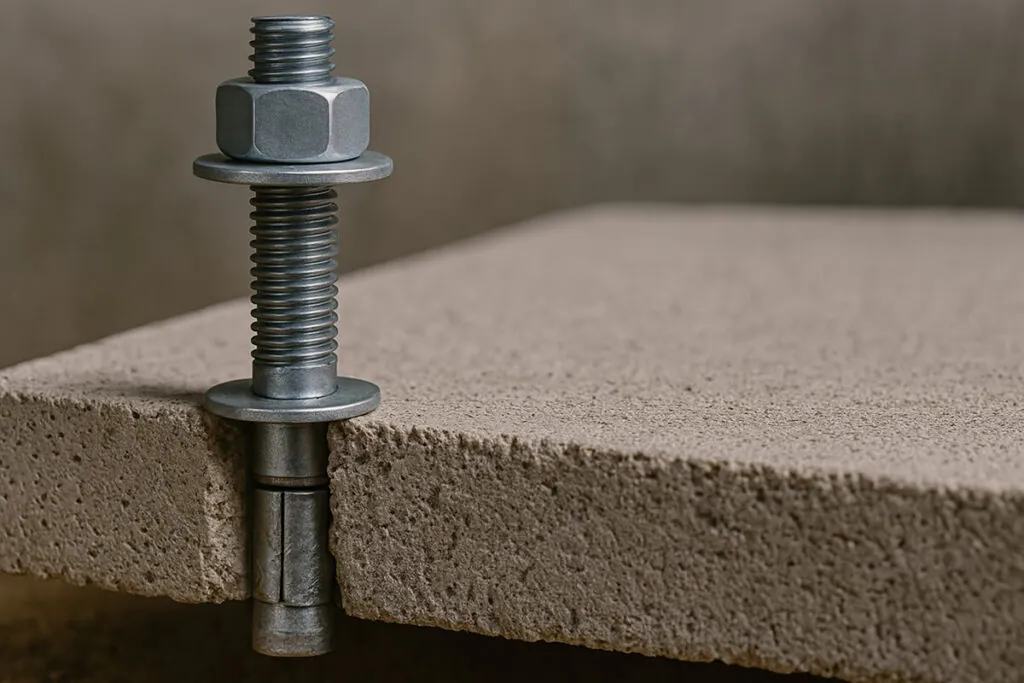
Anchor Bolts

Cutaway View of an anchor bolt installed in concrete - Anchor Bolts

Definition of Anchor Bolts

Anchor Bolts are heavy-duty fasteners used to secure structural elements to concrete or masonry. They typically consist of a threaded rod with a bent or expansion end that grips the substrate. Engineers choose anchor bolts when you need reliable load transfer and resistance to shear or tension forces. You install them by drilling a hole into the base material, inserting the bolt, and then tightening the nut to engage the expansion mechanism or wedged end. Anchor Bolts ensure stable connections in foundations, columns, machinery bases, and safety barriers. Their performance depends on bolt size, embedment depth, and concrete strength, making them critical for structural integrity and long-term durability.

Why It Matters for Screws and Fasteners

When you specify Anchor Bolts, you protect structures from shifting under load. Proper selection prevents costly repairs and ensures compliance with building codes.You save time on installation when bolt type and size match your application. Correct torque and embedment depth cut the risk of pull-out failures.For safety-critical projects, Anchor Bolts give you confidence in load capacity and performance over decades.

FAQ

What are the main types of Anchor Bolts?

The main types include cast-in-place bolts, post-installed expansion anchors, and adhesive-anchored rods. Cast-in-place bolts are set before concrete pours. Expansion and adhesive anchors install after curing.

How do I choose the right Anchor Bolt size?

Match bolt diameter and embedment depth to load requirements and concrete strength. Consult engineering tables or manufacturer guides. Larger diameters and deeper embedment increase load capacity.

What materials are Anchor Bolts made from?

They often use carbon steel, stainless steel, or zinc-plated steel. Stainless steel resists corrosion in damp or coastal environments. Zinc plating offers basic rust protection.

inquire now